
Quick Summary
When an electric gate motor hums, runs intermittently, or fails to start, performing an automatic gate capacitor test identifies whether stored electrical failure or mechanical resistance is disrupting opener performance. Accurate diagnosis requires completely cutting power, draining hazardous residual voltage using a resistor, and measuring microfarad ratings against labeled specifications, with specialists like Ironworks Gate Co. handling out-of-tolerance replacements. Following these diagnostic steps enables owners to safely evaluate operator circuitry and quickly schedule professional electrical repairs to restore gate power.
Automatic Gate Capacitor Testing and Diagnostic Guide
When an electric gate motor hums, exhibits weak operation, fails to start, or operates intermittently, these symptoms can stem from multiple causes, including capacitor, mechanical, voltage, wiring, or motor faults. Because capacitors can retain electrical energy after disconnection, equipment should always be disconnected before inspection or service, and electrical-system work should be referred to a qualified electrician or a specialist such as Ironworks Gate Co.[2]
A capacitance meter can be used to test a capacitor only after disconnecting and safely discharging it, allowing you to compare the measured reading with the labeled capacitance value. Please note that available reference material does not establish a specific failure rate, test frequency, or population-level statistic for automatic gate capacitors.[1] See also Ironworks Gate Co Gate Repair Guide | Call Now-10% Off | On-Site in 60 Minutes | Free Estimate.
Diagnostic Summary
To safely evaluate an automatic gate capacitor, disconnect all incoming power before service or inspection. Capacitors can retain hazardous electrical energy even after line power is removed. After safely discharging the component and disconnecting it from the circuit, measure capacitance with a dedicated meter and compare the reading to the labeled capacitance value on the component. If the reading is abnormal, it indicates a possible capacitor fault that requires further diagnosis. Because motor symptoms like humming or failure to start may also result from mechanical binding, wiring defects, voltage drops, or motor failure, thorough troubleshooting is necessary.[3]
Tools and Safety Precautions
Electrical-system work should be referred to a qualified electrician. If performing preliminary checks, observe strict safety practices.
Diagnostic Equipment
- Digital Multimeter: Must include a capacitance measurement setting (uF or MFD).
- Discharge Tool: According to guidance from Fluke, a 20,000-ohm, 2-watt resistor can be used to discharge stored energy safely; however, users must always follow the specific gate equipment manufacturer’s recommended procedure.
- Insulated Tools: Rated insulated hand tools for handling wiring and terminals.
Safety Warnings
Capacitors can retain dangerous electrical energy after disconnection from power. Always ensure the equipment is disconnected before opening enclosures or touching components. If you are uncertain about performing these checks safely, refer the work to a licensed electrician.
Step 1: Disconnect Power to the Equipment
Before inspecting or servicing any gate opener, ensure all power sources are completely disconnected:
- Turn off the dedicated circuit breaker supplying the gate operator system.
- Turn off any internal power switches or secondary power feeds.
- Verify the absence of voltage across line terminals using a reliable meter before proceeding.
Step 2: Safely Discharge the Capacitor
Because capacitors retain electrical energy after power has been removed, they must be discharged prior to testing or handling.
- According to Fluke guidance, a 20,000-ohm, 2-watt resistor connected across the capacitor terminals for 5 to 10 seconds can safely drain stored energy. Always verify and follow the specific equipment manufacturer’s safety and discharge instructions.
- Confirm zero residual voltage across the terminals with a meter before touching or disconnecting the component.
Step 3: Visual Inspection
Need automatic gate capacitor test?
We’re available now - call for a fast, free estimate.
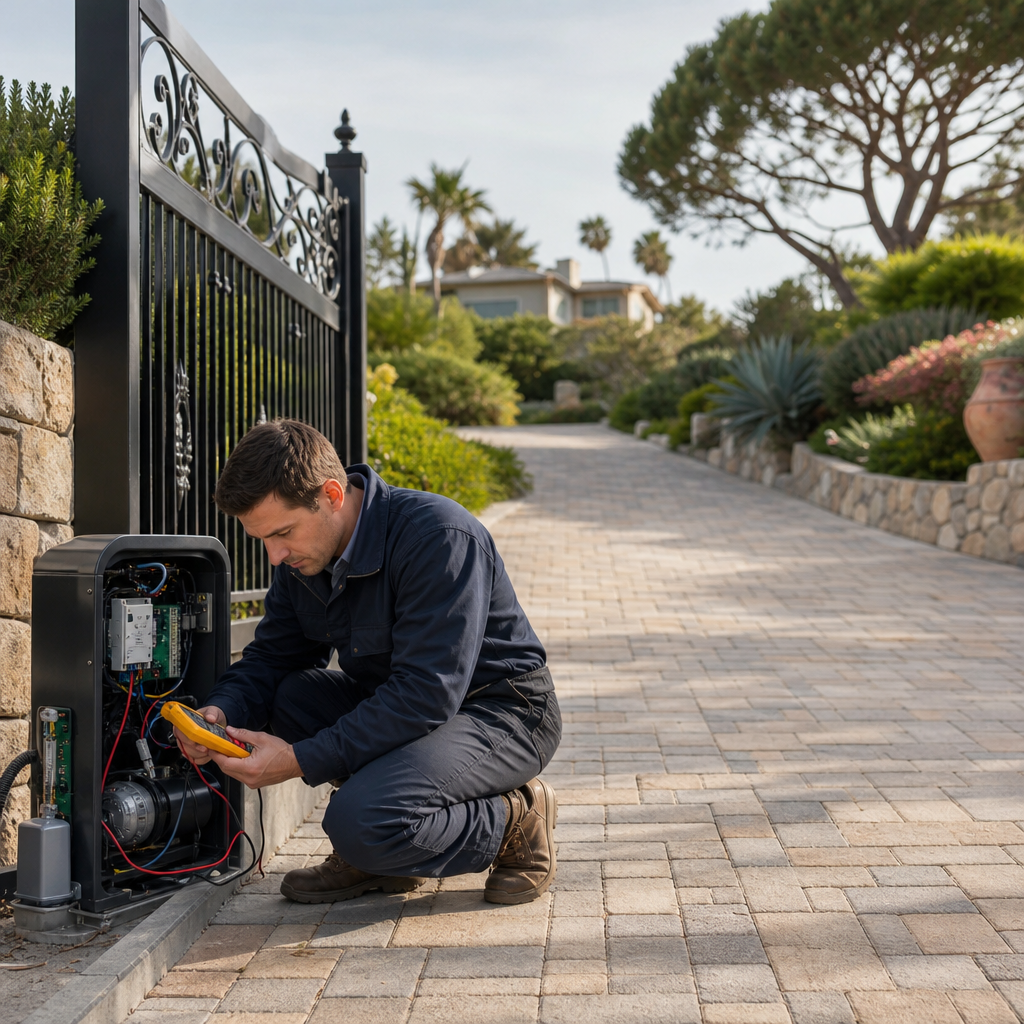
Inspect the capacitor for visible signs of damage, such as swelling, bulging, or visible fluid leakage. While physical defects indicate a compromised component, a capacitor without visible damage may still be faulty, requiring meter testing or professional evaluation from technicians like Ironworks Gate Co.
Step 4: Disconnect the Capacitor
A capacitance meter can be used only after the capacitor has been completely disconnected and safely discharged. Disconnecting the component isolates it from motor windings and control circuitry, preventing inaccurate readings.
Step 5: Measure Capacitance and Compare to Labeled Values
Connect meter test leads to the terminals of the discharged, isolated capacitor.
- Take a reading using the capacitance (uF) mode of your meter.
- Compare the measured value against the labeled capacitance value and stated tolerance printed on the capacitor body.
- If the measured capacitance falls outside the labeled tolerance range, or if the meter displays an open circuit, this indicates a possible capacitor fault and requires further diagnosis or replacement by a qualified professional.
Evaluating Other Potential Faults
If the capacitor tests within its labeled tolerance but the motor continues to hum, operate weakly, fail to start, or run intermittently, the issue may involve other components. Symptoms can be caused by:
- Mechanical issues, such as binding hinges, blocked tracks, or damaged rollers.
- Electrical supply problems, such as low incoming line voltage.
- Wiring faults or loose connections.
- Internal motor or gearbox damage.
Always refer complex electrical-system diagnosis and repairs to a qualified electrician.
Frequently Asked Questions
Why does an electric gate motor hum or fail to operate?
Motor symptoms such as humming, weak operation, failure to start, or intermittent operation can have multiple causes. These include a failing motor capacitor, mechanical binding along the gate track or hinges, low supply voltage, wiring faults, or internal motor damage.
Can I test a capacitor while it is connected to the gate opener?
No. A capacitance meter can be used only after disconnecting and safely discharging the capacitor. Testing an installed capacitor while connected to the circuit can yield inaccurate readings and poses safety risks.
How often should gate opener capacitors be tested or replaced?
The provided research does not establish a specific failure rate, test frequency, or population-level statistic for automatic gate capacitors. If an operator exhibits operational problems, have the electrical system and components inspected by a qualified electrician or technician such as Ironworks Gate Co.
Need automatic gate capacitor test?
We’re available now - call for a fast, free estimate.
Sources
- Potentially Damaging Failure Modes of High – nrc.gov
- NPTC Tools of the Trade: Testing a Motor Capacitor – aces.edu (2021)
- Electrical safety guidelines – ehs.gatech.edu
Related reading: How to Tighten Sliding Gate Chain | 10% Off & Free Estimate | Same-Day Service
Related reading: Emergency Manual Release Driveway Gate – 10% Off & Free Estimate – On-Site in 60 Minutes
Related reading: Reset Gate Motor After Power Outage | Call Now-10% Off | Same-Day Service | Free Estimate
Frequently Asked Questions
What microfarad reading indicates that an automatic gate capacitor has failed?
An automatic gate capacitor is considered failed if the measured microfarad (uF) reading deviates outside the labeled tolerance range, which is typically plus or minus 5% to 10%. If your meter displays an out-of-spec value or an open circuit, Ironworks Gate Co. can provide an on-the-spot replacement matched precisely to your operator's voltage and capacitance requirements.
What should I check if the gate capacitor tests normal but the motor still hums?
If the capacitor is within tolerance, the humming symptom usually points to low incoming line voltage, worn internal motor windings, or physical resistance such as seized rollers or misaligned tracks. Contacting Ironworks Gate Co. for a full electrical and mechanical diagnostic assessment will isolate the underlying issue without risking motor burnout.
Can a damaged gate capacitor cause permanent motor failure if not replaced?
Yes, operating a gate with a degraded or failing capacitor forces the motor windings to draw excessive current while struggling to start, leading to severe overheating and internal motor damage. If you observe physical swelling or weak operation, disconnect power immediately and schedule same-day service with Ironworks Gate Co. to prevent costly operator replacement.
About the author
 |
Sarah Miller Sarah Miller is a specialized content writer focusing on property security and access control systems, with over six years of experience in the home services industry. Holding a B.A. in Communications from California State University, Fullerton, she translates complex technical repair processes and pricing structures into clear, actionable advice. Her work helps property owners navigate gate maintenance and repair costs, ensuring they make informed decisions when hiring contractors. |
Gate not opening, off track, or opener dead?
We’re available now - call for a fast, free estimate.
Call Now - Free Estimate