
Last updated August 25, 2026
Free on-site gate assessment - hinges, posts, and your LiftMaster or Nice gate operator checked before anything is quoted
The assessment is free and the quote is the invoice.
Wood & steel frame
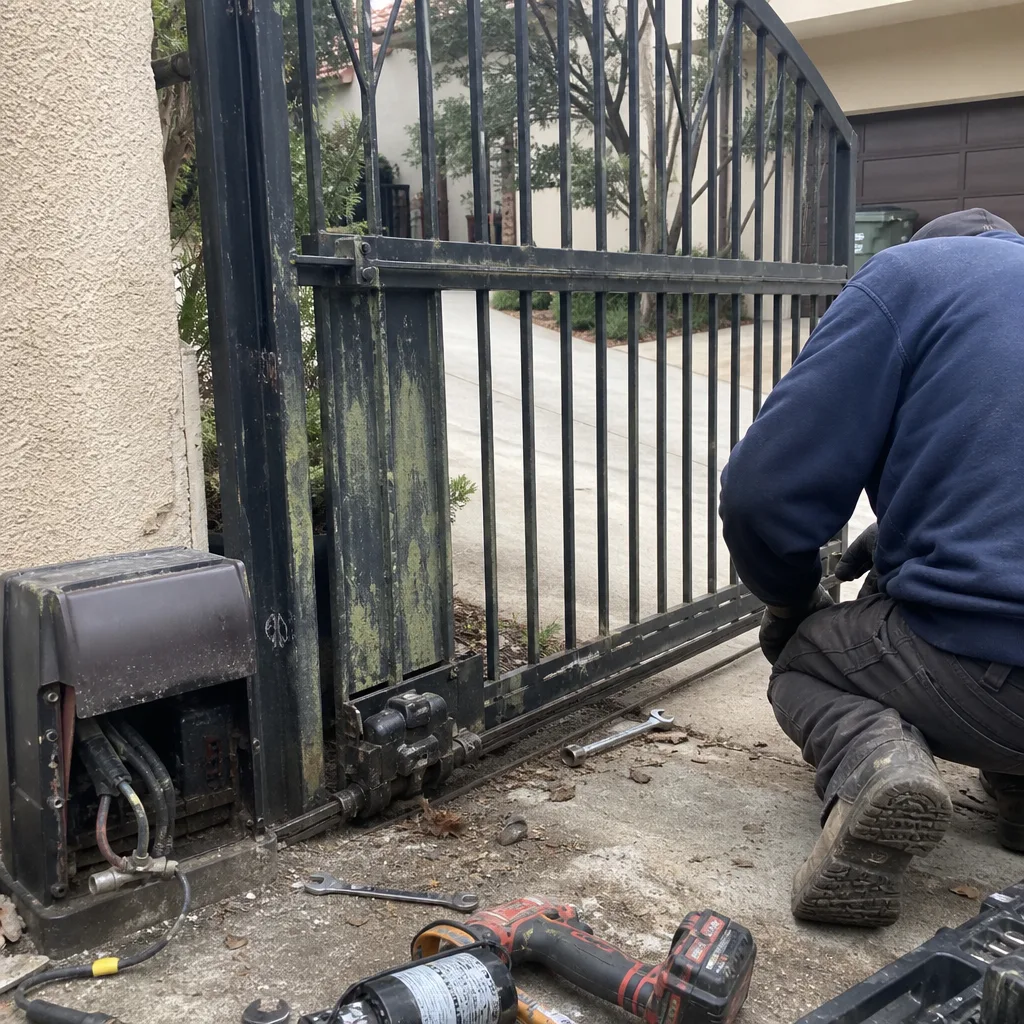 Before
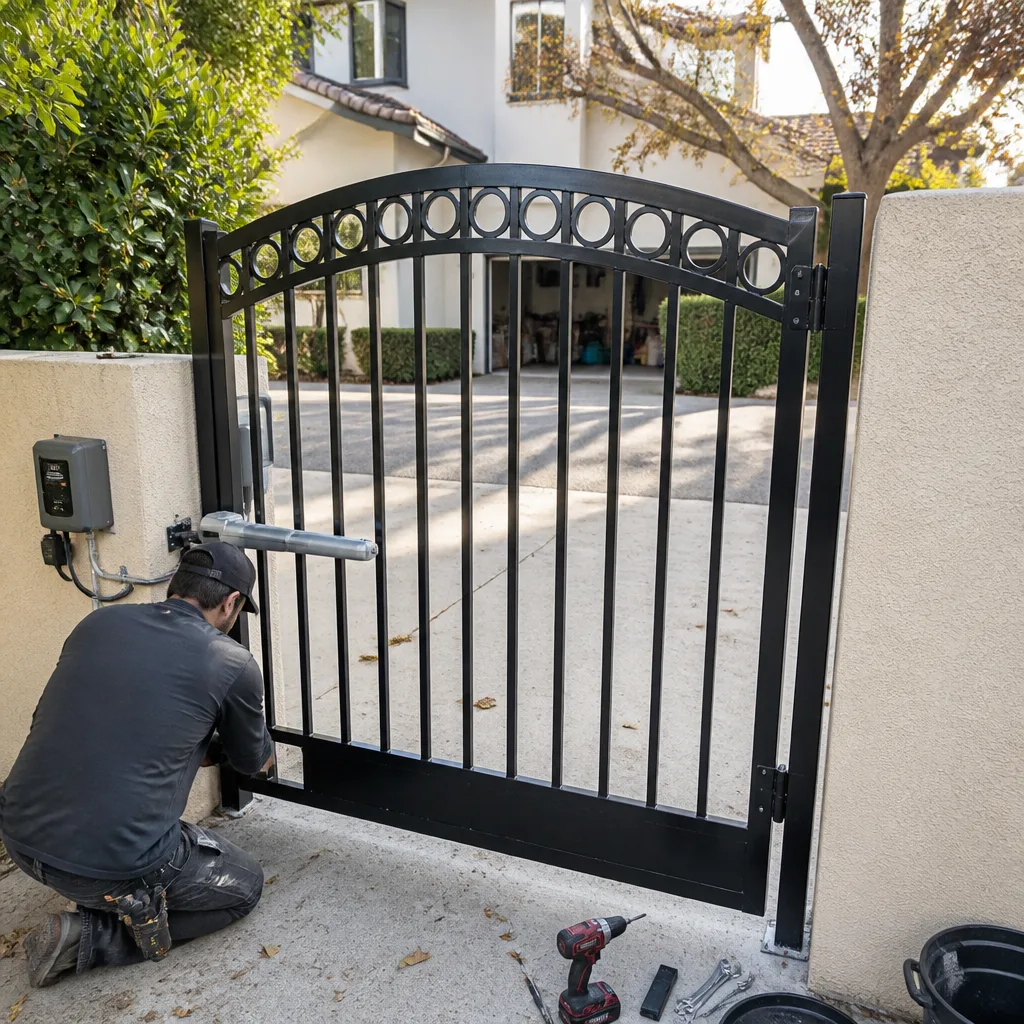 After
After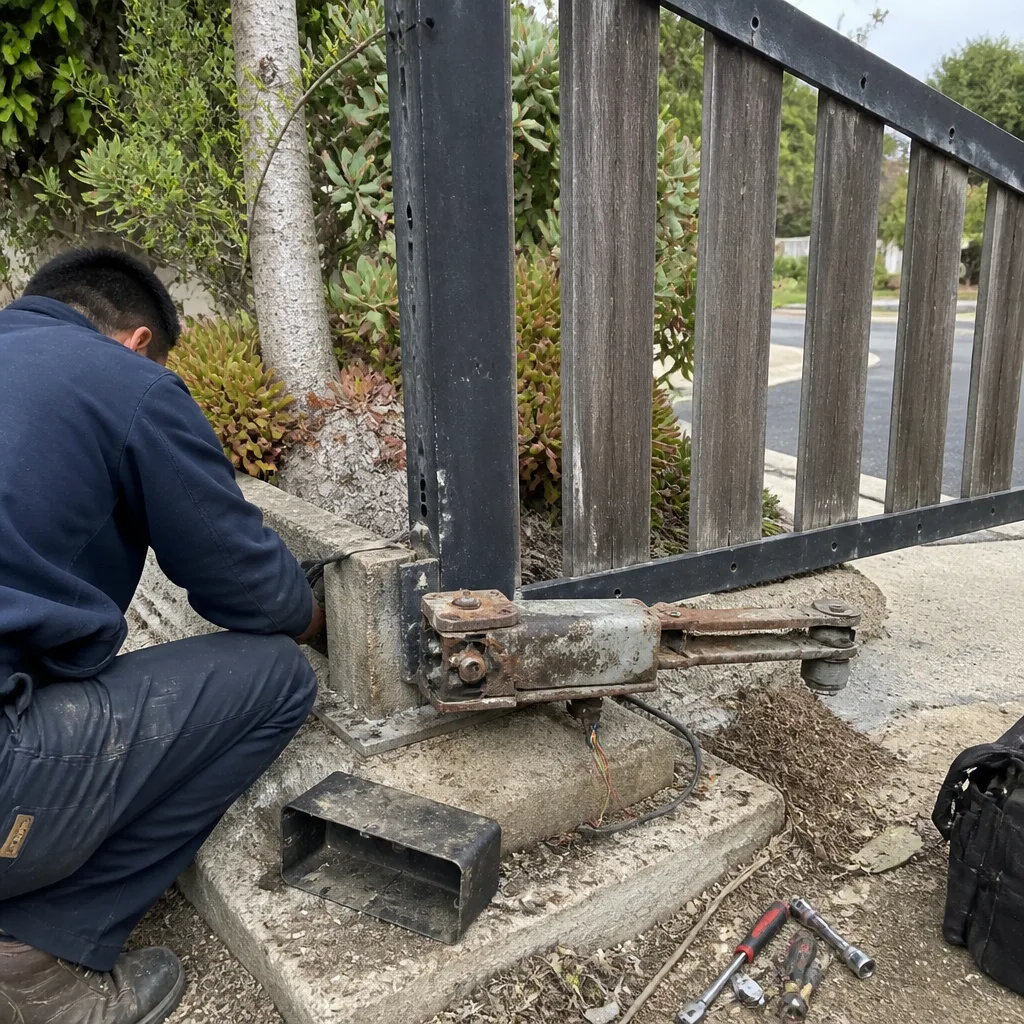 Before
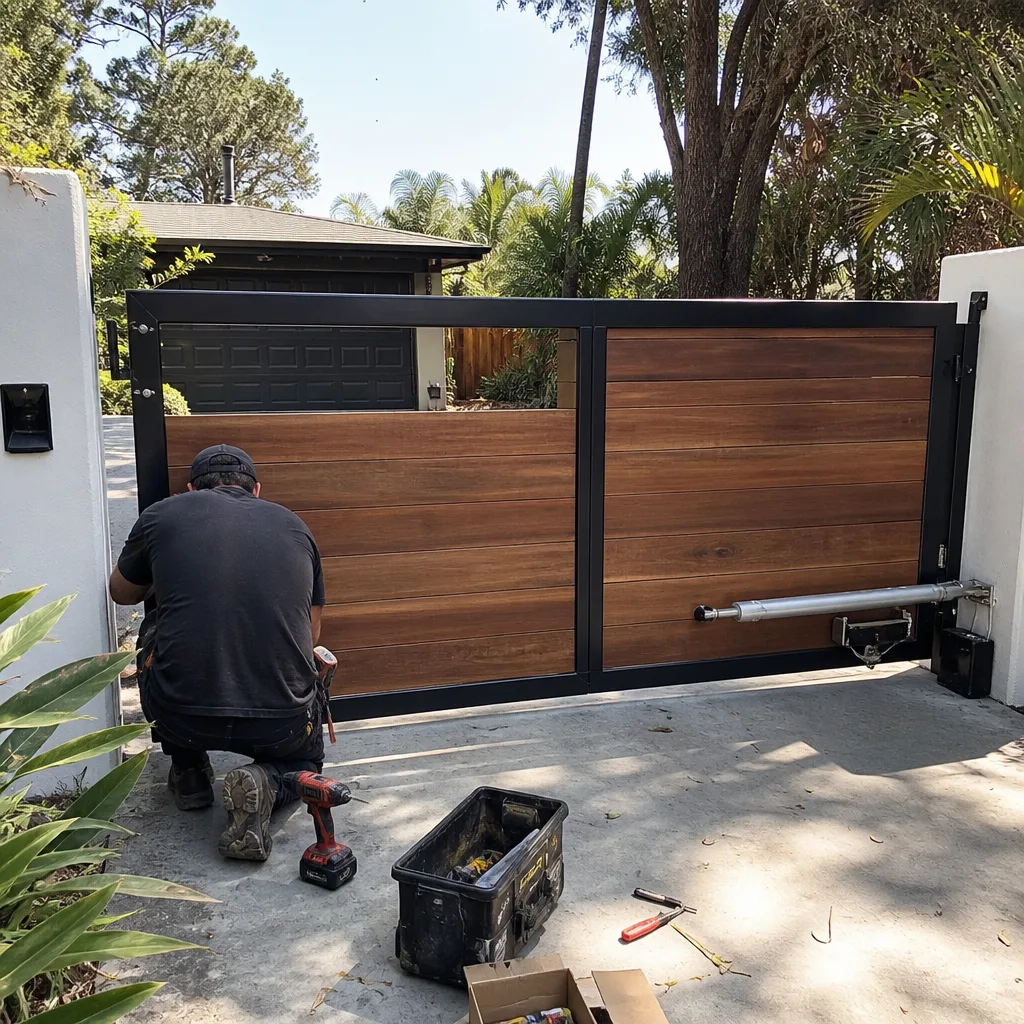 After
After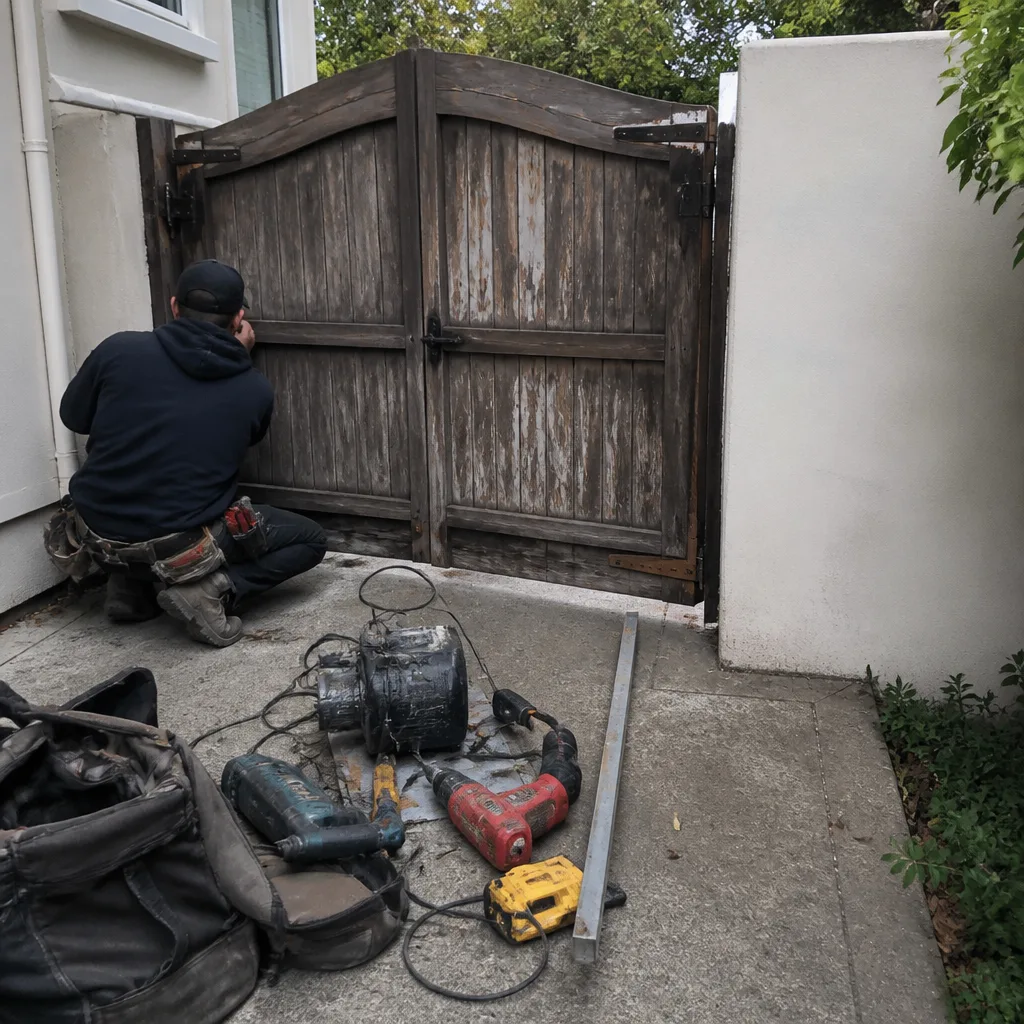 Before
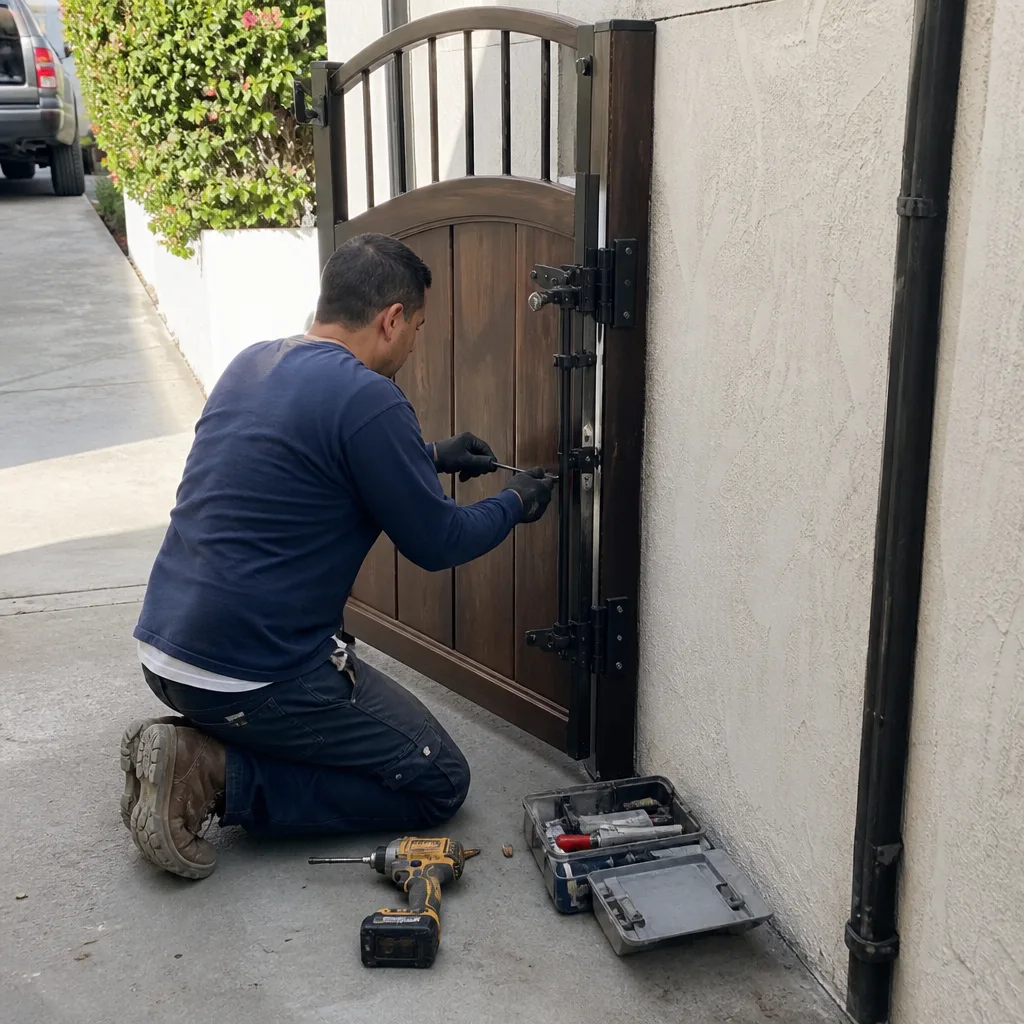 After
AfterGate Repair Permits, Codes & Inspections in CA: What You Need to Know
Here’s a number that surprises most California homeowners: a driveway gate is treated as a structure under state building code, not an accessory. That means a gate that fails inspection can hold up a home sale, trigger a fine, or create a liability headache years after the welds have cooled. In Laguna Beach, where hillside lots and coastal setbacks add their own layers of review, the rules get even more specific. This guide walks through what actually requires a permit, which codes govern gate repair and replacement, what an inspector looks for, and how to avoid the mistakes we’ve watched cost homeowners real money over the past four decades.
Quick Answer
In California, most repairs to an existing gate (hinges, wheels, motor replacement, welding a cracked frame) do not require a building permit. A new gate installation, a gate that moves or widens the driveway opening, or a gate taller than 7 feet generally does. Gate operators must meet UL 325 safety standards, and any electrical work (running power to a motor) requires a separate electrical permit and inspection.
Table of Contents
- When a Gate Repair or Replacement Needs a Permit in CA
- The California Building Codes That Apply to Gates
- UL 325 and Gate Operator Safety: The Non-Negotiable Standard
- Laguna Beach Specifics: Coastal, Hillside, and HOA Layers
- What Happens During a Gate Inspection
- What You Can Check Yourself (and What to Leave Alone)
- The Real Cost of Permits, Codes, and Inspections
- Common Mistakes to Avoid
- When to Call a Professional
- Frequently Asked Questions
- The Bottom Line
When a Gate Repair or Replacement Needs a Permit in CA
Let’s start with the question every homeowner asks first: do I need a permit for this job? The short answer depends on what “this” is.
Under the California Building Code (CBC), which adopts and amends the International Building Code, a building permit is required for any structure that is “constructed, enlarged, altered, repaired, moved, improved, removed, converted, or demolished” unless specifically exempted. The exemptions are what matter for gates.
Here’s how it breaks down in practice:
Work That Typically Does NOT Require a Permit
- Repairing existing gate components: replacing hinges, wheels, rollers, latches, and locks on a gate that is already there. The gate’s footprint does not change.
- Replacing a gate opener or motor on an existing gate, as long as the electrical circuit is already in place and you are not running new power.
- Welding a cracked gate frame or sagging picket, again as long as the gate’s dimensions and location do not change.
- Adjusting travel limits, safety sensors, or photo eyes on an existing operator.
- Replacing a gate panel with one of the same height and width, hung on the same posts.
In all these cases, the local building department treats the work as “maintenance” or “minor repair.” No permit, no inspection, no plan review. In Laguna Beach, this has been our experience on hundreds of service calls: a LiftMaster motor swap or a re-welded hinge does not require a trip to the counter on Forest Avenue.
Work That DOES Require a Permit
- Installing a brand-new gate where none existed before, including adding a second gate leaf to a single-leaf driveway.
- Widening or moving the driveway opening to accommodate a larger gate. This triggers a zoning review in addition to a building review.
- Adding new gate posts in a new location, because posts are embedded in concrete footings and treated as structural elements.
- A gate taller than 7 feet. Above 7 feet, the California Building Code classifies the gate as a “fence” structure subject to different wind-load and structural calculations.
- Running new electrical wire from the house panel to the gate location. This is a separate electrical permit, even if the gate itself is a repair.
- Installing an automatic opener on a gate that has never had one, when the installation includes new conduit, new wiring, and new concrete pads for the operator arm.
The distinction comes down to one question: does the work change what the gate is, where it is, or how it draws power? If yes, a permit is likely required. If the answer is no, you are looking at maintenance.
One more nuance: even when a permit is not required, the work still has to comply with code. A permit is a review process, not a safety rule. You can do unpermitted work that is perfectly safe, and you can do permitted work that gets flagged. The codes apply either way.
The California Building Codes That Apply to Gates
Gate work in California falls under a handful of specific code sections. Understanding which one applies to your gate helps you have an informed conversation with a contractor or an inspector.
CBC Chapter 1: Scope and Administration
Chapter 1 establishes what needs a permit and what does not. Section 105.2 lists “work exempt from permits” and is the section most gate repairs fall under. The exemption covers simple repairs and replacements of non-structural components.
CBC Section 3110: Automated Vehicular Gates
This is the big one for automatic gates. California added specific language for vehicular gate operators following a series of national entrapment deaths. Section 3110 references UL 325 directly and requires that every automated vehicular gate meet the entrapment-protection provisions of that standard. In plain terms: if your gate opens and closes by itself, it has to have working safety edges, photo eyes, or both, and the operator has to reverse on contact.
CBC Chapter 16: Structural Design
Gates taller than 7 feet or wider than 12 feet get treated as engineered structures. The code sets minimum design wind loads based on the local wind zone. Laguna Beach sits in a coastal exposure category, which means higher wind pressures than inland Orange County. A wide, tall estate gate in Emerald Bay or Three Arch Bay isn’t just a welded frame; it’s a structure that has to resist a defined wind load without deflecting beyond allowable limits.
California Electrical Code (CEC)
Any new electrical circuit feeding a gate operator falls under the CEC. Low-voltage systems (24V) have fewer requirements, but line-voltage runs (120V) require proper burial depth, conduit, GFCI protection where applicable, and a permit. The CEC also governs bonding and grounding for metal gates, which matters in coastal areas where salt air accelerates corrosion on grounding connections.
UL 325 and Gate Operator Safety: The Non-Negotiable Standard
UL 325 is the safety standard that governs automatic gate operators, and it matters more in California than almost anywhere else because the state code explicitly adopts it. The standard was created after a series of tragedies in which children and adults were entrapped and killed by moving gates, and every major operator manufacturer has built compliance into its equipment since the early 2000s.
What UL 325 requires, in practical terms:
- Entrapment protection on every automatic gate. For a swing gate, that typically means one monitored safety edge or photo eye per entrapment zone. For a slide gate, it means a monitored external entrapment sensor (contact edge) and a photo eye.
- A reversing mechanism. The gate must reverse if it contacts an obstruction while closing. This isn’t optional; it’s the core safety function.
- Warning signs. Specific signage must be posted on both sides of the gate, warning that the gate opens automatically.
- Audible alarms for certain gate types, particularly slide gates in some configurations.
- Access control placement. Keypads and call stations must be positioned so a user cannot reach through the gate while it is moving.
Here’s what this means for a homeowner in practical terms: if your gate operator is more than 15 to 20 years old, there’s a real chance it does not meet current UL 325 requirements. We’ve replaced enough old operators in Laguna Beach to know that a surprising number of gates still running on original equipment from the 1990s lack proper photo-eye coverage or have safety edges that have crumbled to dust. That’s not a code violation a building inspector will catch (they only show up when you pull a permit), but it is a liability that sits on the property.
Does Replacing an Old Operator Require an Upgrade to Current Standards?
Yes. When you replace an automatic gate operator, the new equipment must comply with the current UL 325 standard. You cannot install an old, non-compliant operator as a “direct replacement.” Practically, this means installing modern photo eyes and safety edges if the old system did not have them. A reputable gate contractor will include this in the quote. In our experience installing LiftMaster, FAAC, and BFT operators across Orange County, this added safety hardware typically accounts for $200 to $500 of the job cost, depending on the gate type and terrain.
Laguna Beach Specifics: Coastal, Hillside, and HOA Layers
Laguna Beach adds three layers on top of state code that affect gate work in ways most contractors don’t mention.
1. Coastal Zone and Permit Review
Laguna Beach sits entirely within the California Coastal Zone. The California Coastal Act gives the Coastal Commission jurisdiction over development in this zone, and Laguna Beach has a certified Local Coastal Program (LCP), which means the city reviews most projects for coastal compliance. For a replacement gate that stays within the same footprint and height, the coastal review is typically straightforward or waived. For a new gate, taller gate, or widened driveway opening, the project may require a Coastal Development Permit (CDP) in addition to a building permit. That can add 6 to 12 weeks to the timeline.
2. Hillside and Slope Conditions
Many Laguna Beach homes sit on hillside lots with slope conditions that trigger geotechnical review. A gate post set in concrete on a slope needs to be dug to a depth that reaches competent soil, and the building department may require an engineer’s letter for any post over 8 feet tall or any gate over 10 feet wide on a slope exceeding 15 percent. This is especially common in neighborhoods like Top of the World, Temple Hills, and the steep streets above Pacific Coast Highway.
3. HOA and View Protection Rules
Laguna Beach has an unusually high concentration of HOAs, and many of them have their own architectural review process that is separate from the city. In communities like Emerald Bay, Three Arch Bay, and Irvine Cove, a gate replacement or even a significant repair may require architectural committee approval, which can take 30 to 60 days. The city permit process and the HOA process run in parallel, not in sequence, so smart homeowners start both at the same time.
The practical takeaway: in Laguna Beach, a new or enlarged gate is rarely a one-week permit. Plan for 6 to 12 weeks of review depending on the scope, and start with a call to the city’s Community Development Department to ask whether your specific project qualifies as exempt.
What Happens During a Gate Inspection
If your project does require a permit, you will have at least one inspection. Here’s what the inspector is looking at, step by step:
- Footing inspection (for new posts). Before any concrete is poured, the inspector checks the hole depth, diameter, and setback from the property line. In Laguna Beach, post holes on slopes typically need to be at least 30 to 36 inches deep and bell-bottomed, but the approved plan governs the exact depth.
- Concrete or in-progress inspection. After the posts are set but before the gate is hung, the inspector verifies the posts are plumb, the concrete is mixed to spec, and the embedment depth matches the plan.
- Final building inspection. Once the gate is hung and operational, the inspector checks the gate height, width, swing direction, latch function, and overall structural condition. For automatic gates, he or she will verify the operator is UL 325 compliant and that the safety edges and photo eyes are present and functional.
- Electrical inspection (if applicable). A separate electrical inspector verifies the circuit, conduit, bonding, and GFCI protection. This inspection often happens on the same day as the final building inspection.
In our experience, the most common reasons a gate fails a final inspection are: missing photo eyes, safety edges that are present but not wired to the operator, a gate that swings beyond its permitted arc and encroaches on the public right-of-way, and post heights that exceed the approved plan. None of these are exotic failures; they are the result of rushed work.
What You Can Check Yourself (and What to Leave Alone)
Most gate maintenance does not require a permit, and a homeowner can handle a meaningful amount of it. Here’s a sensible division of labor.
Safe to Check Yourself
- Hinge lubrication. A dry hinge wears faster and makes the gate harder for the operator to move. A few drops of a good penetrating oil twice a year is cheap maintenance.
- Photo eye alignment. If your gate reverses for no reason, check whether the photo eyes are clean and pointed at each other. Small alignment errors cause most false reversals.
- Safety edge function. Press the safety edge with your hand while the gate closes. The gate should reverse immediately. If it doesn’t, that’s a real safety defect.
- Track clearing (slide gates). Clean the track of leaves, pebbles, and debris. A slide gate that fights debris works the motor twice as hard.
- Post and weld inspection. Look for visible cracks in the weld joints, especially at the hinge side, and rust at the base of the posts. In Laguna Beach’s salt air, surface rust that looks minor can hide significant section loss underneath.
Leave Alone - Genuinely Dangerous Components
Certain parts of a gate system are dangerous enough that a homeowner should not attempt repairs without training and tools. This isn’t a sales position; it’s a safety reality.
- Tension-loaded mechanisms. Some slide gates and cantilever gates use tensioned cables or counterweights. If a cable snaps under load, the recoil can cause serious injury. If you see a frayed cable or hear the gate “fighting” to move, shut the system down and call someone who works on these daily.
- Line-voltage electrical connections. Any work on the 120V side of the operator belongs to a licensed electrician or a qualified gate technician. Low-voltage control wiring (24V) is lower risk, but line voltage is line voltage.
- Heavy gate leaf removal. A 16-foot steel gate can weigh 400 to 800 pounds. Lifting one off its hinges without proper support is how shoulders get torn and fingers get crushed. We’ve seen homeowners try it with a floor jack and a prayer, and it doesn’t end well.
- Operator spring assemblies. Some older operator systems use mechanical springs that store a surprising amount of energy. Disassembling one without understanding the load path is risky.
The division is simple: inspect, clean, lubricate, and observe - yes. Disassemble, re-wire, or lift - get help.
The Real Cost of Permits, Codes, and Inspections
When we quote a gate project that involves a permit, homeowners are often surprised by the line items. Here’s what the compliance side actually costs in Laguna Beach, based on current fee schedules and our recent project history.
| Item | Typical Range (Laguna Beach) | Notes |
|---|---|---|
| Building permit (minor gate replacement) | $180 - $450 | Based on project valuation |
| Electrical permit (new circuit to gate) | $120 - $300 | Separate from building permit |
| Plan review fee | $50 - $200 | Only if plans are required |
| Coastal Development Permit (when triggered) | $500 - $1,500+ | Applies to new gates, enlarged openings, or height increases |
| Structural engineer’s letter (hillside lots) | $400 - $1,200 | Required for larger gates on steep slopes |
| Inspection fees | Included in permit cost | One to three inspections depending on scope |
| Survey or site plan (when required) | $300 - $800 | Typically only for new gates or moved openings |
These are real numbers from the Laguna Beach market, not averages pulled from a national website. The total compliance cost for a straightforward new automatic gate installation typically lands between $800 and $2,500 on top of the gate and labor, depending on whether a coastal permit and engineer are required. That’s the cost of doing it correctly.
What is the cost of not doing it correctly? An unpermitted gate that a building inspector flags during a separate project (a kitchen remodel, a new roof) can trigger a stop-work order, fines that start around $500 and escalate, and the cost of retroactive permitting, which almost always costs more than pulling the permit up front. We’ve also seen unpermitted gates become a sticking point in escrow when a home inspector flags the operator as non-compliant. The buyer’s lender asks for a retroactive permit. The seller scrambles. The gate becomes a negotiating chip.
Common Mistakes to Avoid
- Replacing a gate operator without checking UL 325 compliance. A new operator installed without proper entrapment protection is not just a code miss; it’s a liability that transfers to the next owner. Always verify the safety edges and photo eyes are part of the job.
- Widening a driveway opening without checking the coastal and zoning rules first. In Laguna Beach, moving the gate line even 12 inches can trigger a Coastal Development Permit and a zoning review. We’ve seen homeowners carry the cost of re-doing plans because they widened first and asked later.
- Setting new gate posts without a footing inspection. If a permit was pulled and the posts go in before the inspector checks the holes, the inspector can require removal and re-excavation. That’s an expensive conversation.
- Ignoring HOA architectural review on the assumption “it’s just a gate.” Several Laguna Beach HOAs are strict about gate style, finish, and height. A $9,000 gate installed without HOA approval can trigger a demand to remove and replace it.
- Running 120V power to a gate without a permit or electrician. Unpermitted electrical work is the thing most likely to surface later and most likely to void a homeowner’s insurance claim if something goes wrong.
- Skipping the safety edge replacement because “the gate still works.” A gate operator can function for years with a dead safety edge. It reverses at the limits, it opens and closes. But the first time a child or a pet is in the closing path, that dead edge is the difference between a close call and a serious injury.
When to Call a Professional
If you’re replacing a hinge, cleaning a photo eye, or tightening a latch, that’s reasonable homeowner maintenance. But these are the situations where calling a professional is the cheapest option in the long run:
- A new automatic gate installation. The permit, the electrical run, the UL 325 compliance, the operator programming - this is a multi-trade job that rewards experience.
- Any repair involving line-voltage wiring. If you have to open the operator’s electrical enclosure or run a new circuit, it’s time to call.
- A gate that has come off its track or broken a weld under load. The unseen damage is usually worse than the visible damage.
- An operator that is more than 20 years old and showing intermittent failures. This is the classic “will likely fail completely within months” window.
- Any gate on a slope where posts are leaning or the concrete is cracked. Slope failures get worse, not better.
Ironworks Gate Co. offers free estimates in Laguna Beach. Call (442) 246-9347 and a real person answers, 24 hours a day, 7 days a week. We’ll tell you honestly whether your job needs a permit or not, and what it will cost before any work starts.
Frequently Asked Questions
In most cases, no - replacing an existing gate opener with a new one does not require a building permit, provided you are not running new electrical circuits or changing the gate’s structure. The new operator must meet current UL 325 safety standards, which includes functioning entrapment protection. If you’re replacing an opener in Laguna Beach and want to know whether your specific setup is compliant, call (442) 246-9347 for an honest answer and a free estimate.
A gate up to 7 feet tall is generally treated as a standard gate structure and does not trigger the taller-structure engineering requirements. Above 7 feet, the California Building Code treats it as a fence structure subject to wind-load calculations, and a permit is almost always required. There is no height at which safety standards stop applying; the UL 325 requirements apply to automatic gates of any height.
UL 325 is the national safety standard for automatic gate operators, and California code explicitly requires compliance. It mandates entrapment protection (safety edges, photo eyes, or both), automatic reversal on contact, warning signage, and specific placement of access controls. An operator that does not meet UL 325 is a code violation and a safety liability.
No, HOA rules cannot relax a city or state code requirement, but they can impose stricter ones. An HOA can require a particular gate style, finish, or height limit lower than the city allows, and it can require architectural review even when the city does not require a permit. You have to satisfy both processes independently.
If an unpermitted gate is discovered during a subsequent inspection, a home sale, or a neighborhood complaint, the city can require a retroactive permit, which typically costs more than the original permit would have. There may also be fines. If the unpermitted work includes electrical work that does not meet code, the correction costs can exceed the original gate installation. We have seen this happen in Laguna Beach, and it’s an avoidable outcome.
Yes. On any job that requires a permit, we handle the full process from application to final inspection, including coordinating with the City of Laguna Beach and any HOA architectural committee. The permit fees are passed through at cost, and we walk you through what is being submitted at every step. Call (442) 246-9347 to discuss your specific project.
The Bottom Line
Gate permits, codes, and inspections in California come down to one principle: maintenance is exempt, construction is reviewed, and safety is never optional. A hinge replacement needs no permit. A new gate, a widened opening, a new electrical circuit, or a gate over 7 feet triggers review. Every automatic gate has to meet UL 325 whether a permit is pulled or not. In Laguna Beach, the coastal zone, hillside conditions, and HOA layers add review time, so start early and ask the right questions. The cheapest gate is the one that is done correctly the first time, backed in writing, and never a problem again. That’s the standard we’ve held at Ironworks Gate Co. for over 42 years, from Ironworks Gate Co. home service calls throughout the coast.
Written by Victor Salinas, Owner at Ironworks Gate Co., serving Laguna Beach since 2013.