
Last updated August 25, 2026
Free on-site gate assessment - hinges, posts, and your LiftMaster or Nice gate operator checked before anything is quoted
The assessment is free and the quote is the invoice.
Wood & steel frame
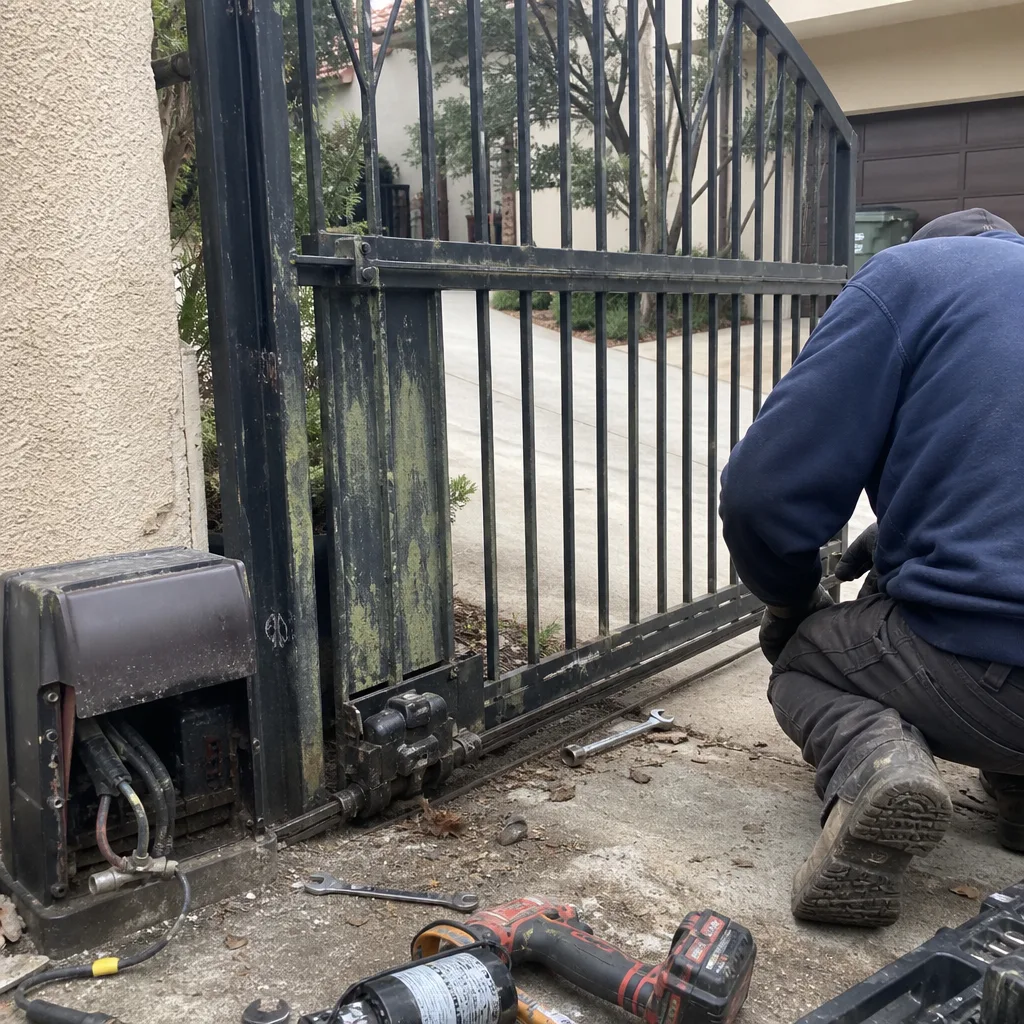 Before
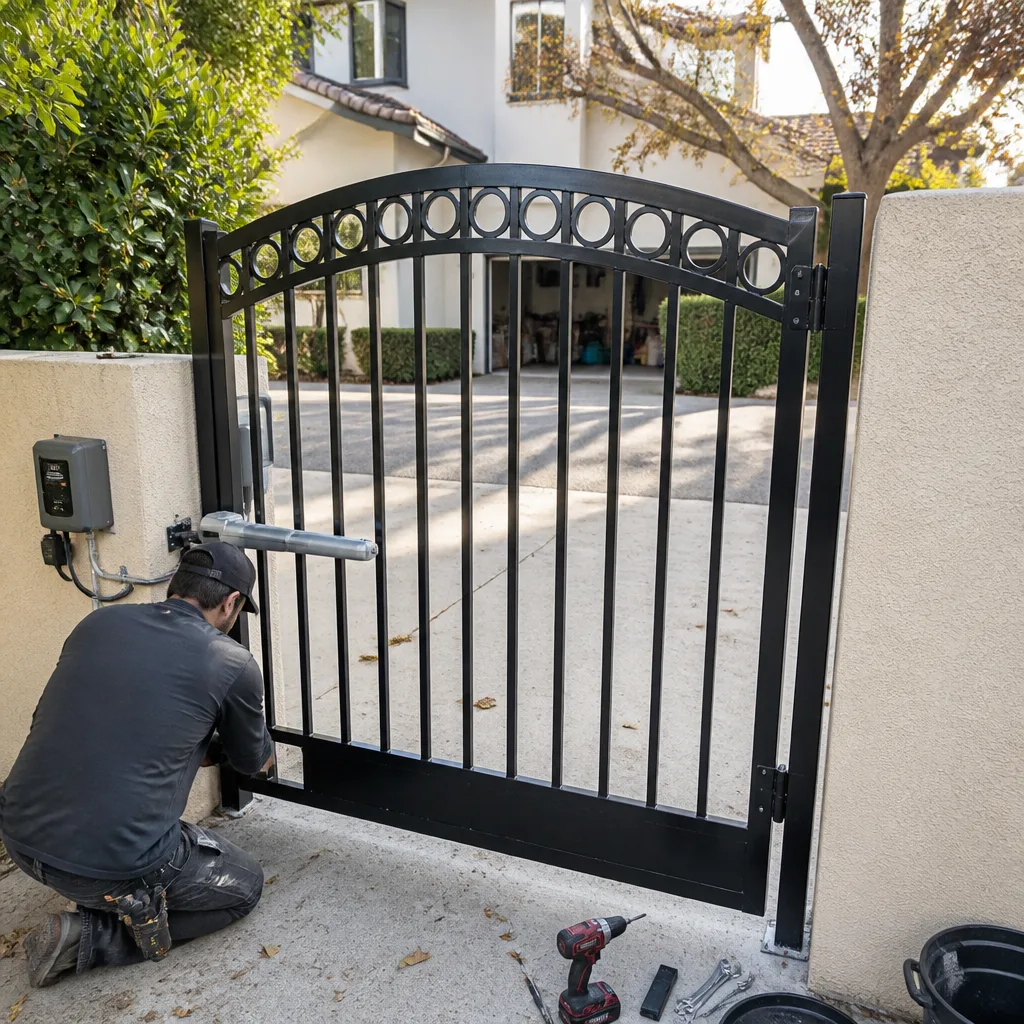 After
After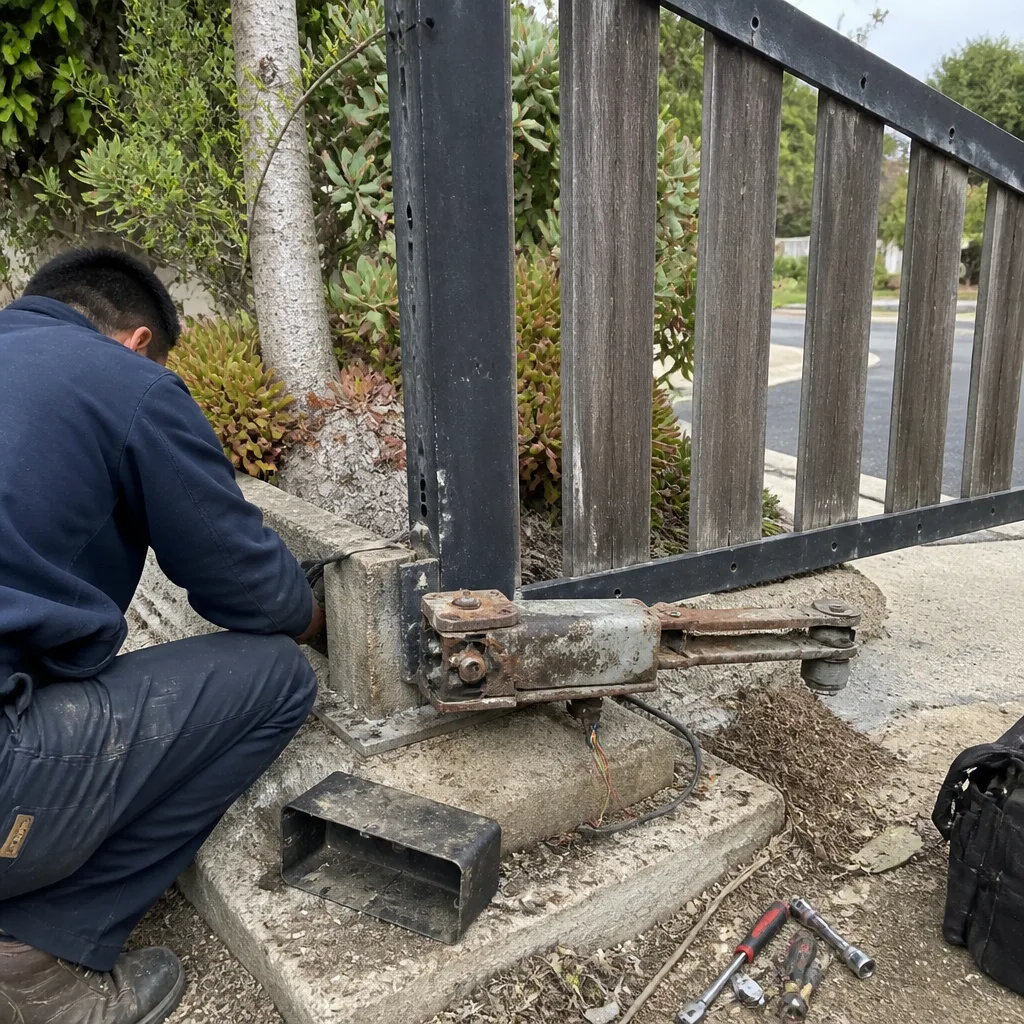 Before
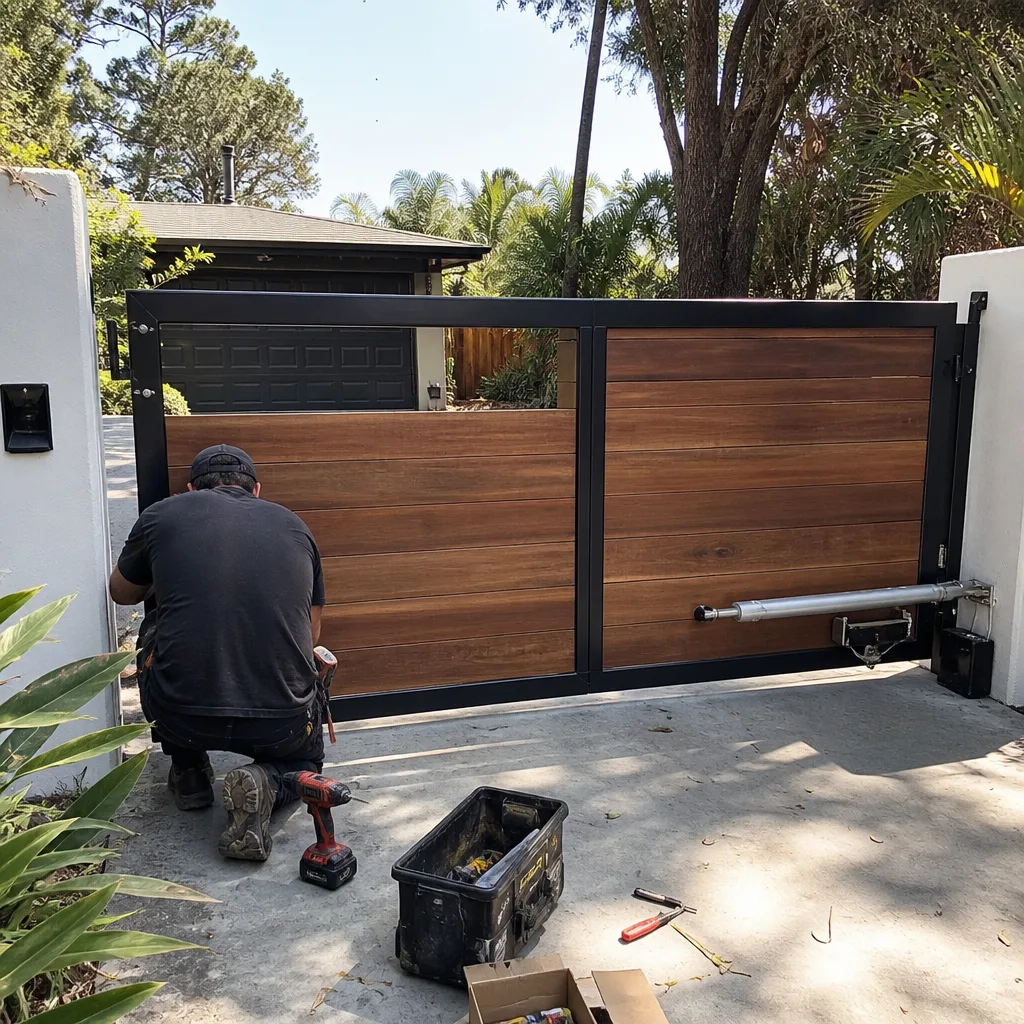 After
After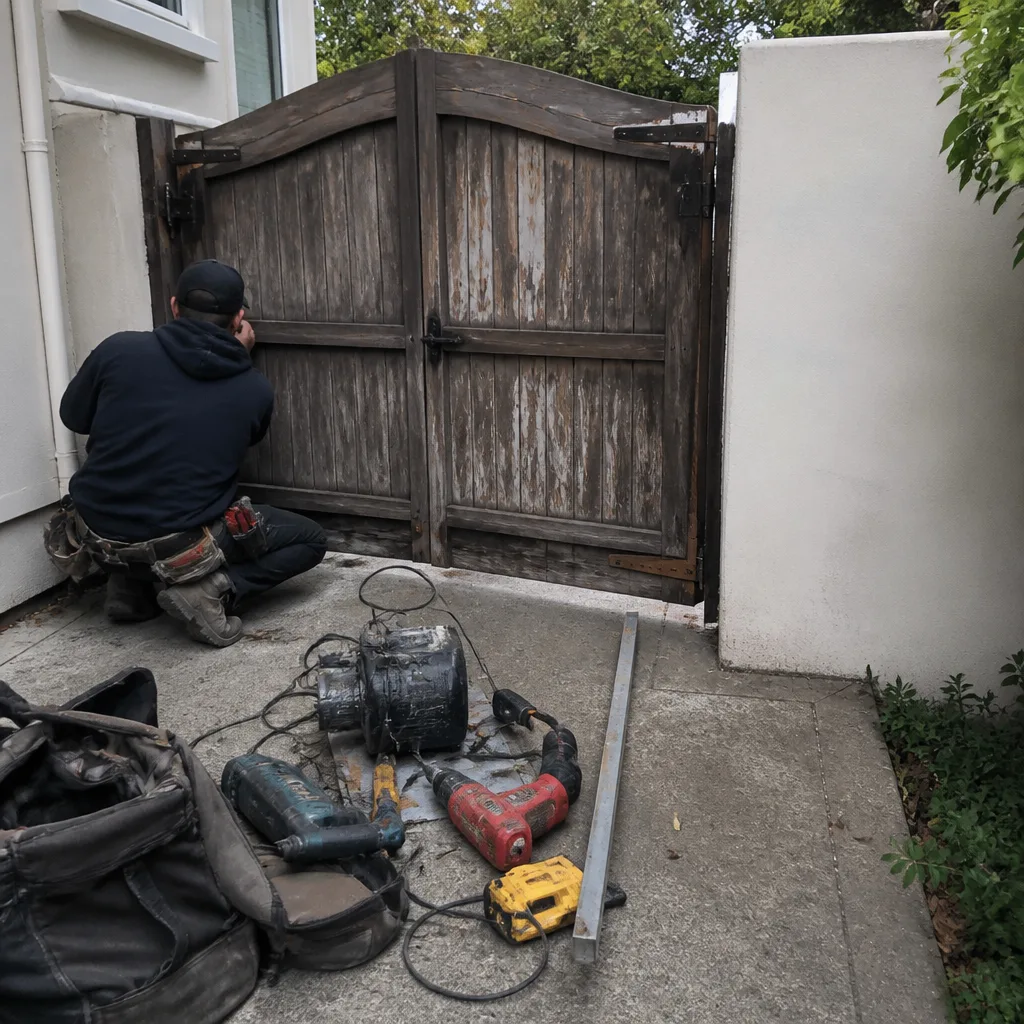 Before
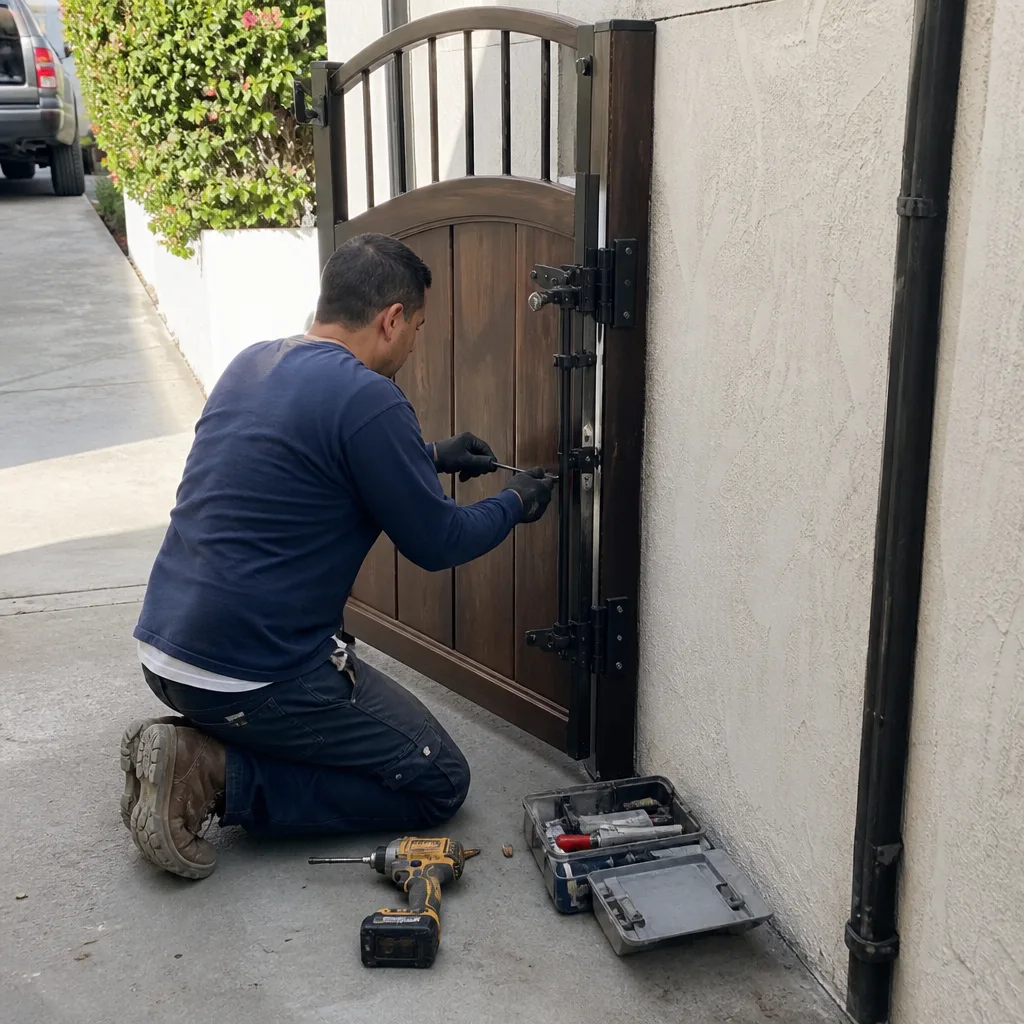 After
AfterSeasonal Gate Repair Care for Laguna Beach: Year-Round Homeowner’s Guide
Most Laguna Beach homeowners replace a gate motor before they ever needed to. That is the quiet truth of coastal gate ownership. The salt air, the morning marine layer, and the June gloom fog work on metal and electronics all year long, and by the time a gate groans or a motor fails, the damage has usually been building for months. This guide explains what actually wears out, when it wears out, and what a sensible homeowner does about it in each season. It is written for the person who would rather spend one Saturday morning a year on prevention than replace a $900 opener every third spring.
Quick Answer
Seasonal gate care in Laguna Beach means treating salt exposure and moisture as your gate’s two constant enemies. A practical year-round routine is: wipe down and inspect the gate every three months, schedule one full tune-up each fall before the winter rains, and address any squeak, hesitation, or jerky motion within a few days of noticing it. Homeowners who follow this rhythm typically get a decade or more out of a quality gate and motor, while those who wait for failure replace components far sooner than necessary.
Table of Contents
- Why Laguna Beach Coastal Air Is Harder on Gates Than Inland Heat
- What Actually Wears Out on a Laguna Beach Gate: The Four Components That Fail First
- Spring Gate Care in Laguna Beach: Clearing the Rainy Season’s Damage
- Summer Gate Care: Salt Film, Sun, and the Season of Heavy Use
- Fall Gate Care: The Most Important Tune-Up of the Year
- Winter Gate Care: Rain, Rust, and What to Check After Every Storm
- A Simple Year-Round Maintenance Rhythm for Laguna Beach Homeowners
- Common Mistakes to Avoid
- When to Call a Professional
- Frequently Asked Questions
- The Bottom Line
Why Laguna Beach Coastal Air Is Harder on Gates Than Inland Heat
Inland gate owners fight sun and dust. Laguna Beach gate owners fight salt and moisture. Those are different battles.
The salt in a marine layer does not need to be visible to be working. After a foggy morning in Arch Beach Heights or up in Top of the World, the thin film of moisture that settled on your gate overnight carries dissolved salt. When the moisture evaporates, the salt stays. It sits in hinge pins, on bolt threads, along the bottom rail of the gate panel, and inside the motor housing where the wiring connects. Over a year, that salt accelerates corrosion in a way that Aliso Viejo or Mission Viejo homeowners simply never see.
Moisture is the second constant. A driveway gate in Laguna Beach lives in an environment where the relative humidity rarely drops below 60 percent, even on a sunny July afternoon. Electronics do not like that. Gate opener control boards are sealed, but their connectors corrode over time. Photo-eye sensors grow a scum of salt and dust that causes intermittent failures. Limit switches gum up. None of this happens suddenly. It happens gradually, and then one morning the gate opens but will not close, or it reverses at the halfway point for no visible reason.
The point is not that a coastal gate is doomed. The point is that a coastal gate has a predictable maintenance need. Ignore it, and you will replace parts more often. Address it with a simple seasonal rhythm, and a well-built steel or aluminum gate in Laguna Beach will outlast most of the homes it guards.
In our experience across our gate service work in Laguna Beach, the gates that survive the longest are not the most expensive ones. They are the ones that get wiped down, inspected, and tuned on a schedule.
What Actually Wears Out on a Laguna Beach Gate: The Four Components That Fail First
Every gate has the same anatomy. Knowing which parts fail first helps a homeowner understand what a seasonal inspection is actually looking for. Here are the four components we replace most often on Laguna Beach properties, in order of frequency.
1. Hinge bearings and hinge pins
A heavy steel driveway gate can weigh 400 pounds or more. All of that weight hangs on two or three hinge points. Over time, the bearing surfaces wear, the pins develop play, and the gate begins to sag. A sagging gate drags on the ground, strains the opener, and eventually strips the gears in the motor. On a hillside property in Laguna Beach where the driveway slopes, the strain is even worse because gravity never stops pulling.
2. Photo-eye sensors and safety edges
The sensors that detect a car or a child in the gate’s path are the most exposed electronic components on the system. Salt film accumulates on the lenses. Connections behind the sensors corrode. Safety edges, the pressure-sensitive strips along the leading edge of the gate, crack and let moisture in. When these components fail, the gate behaves erratically, often refusing to close or reversing for no reason.
3. Opener gears and belts
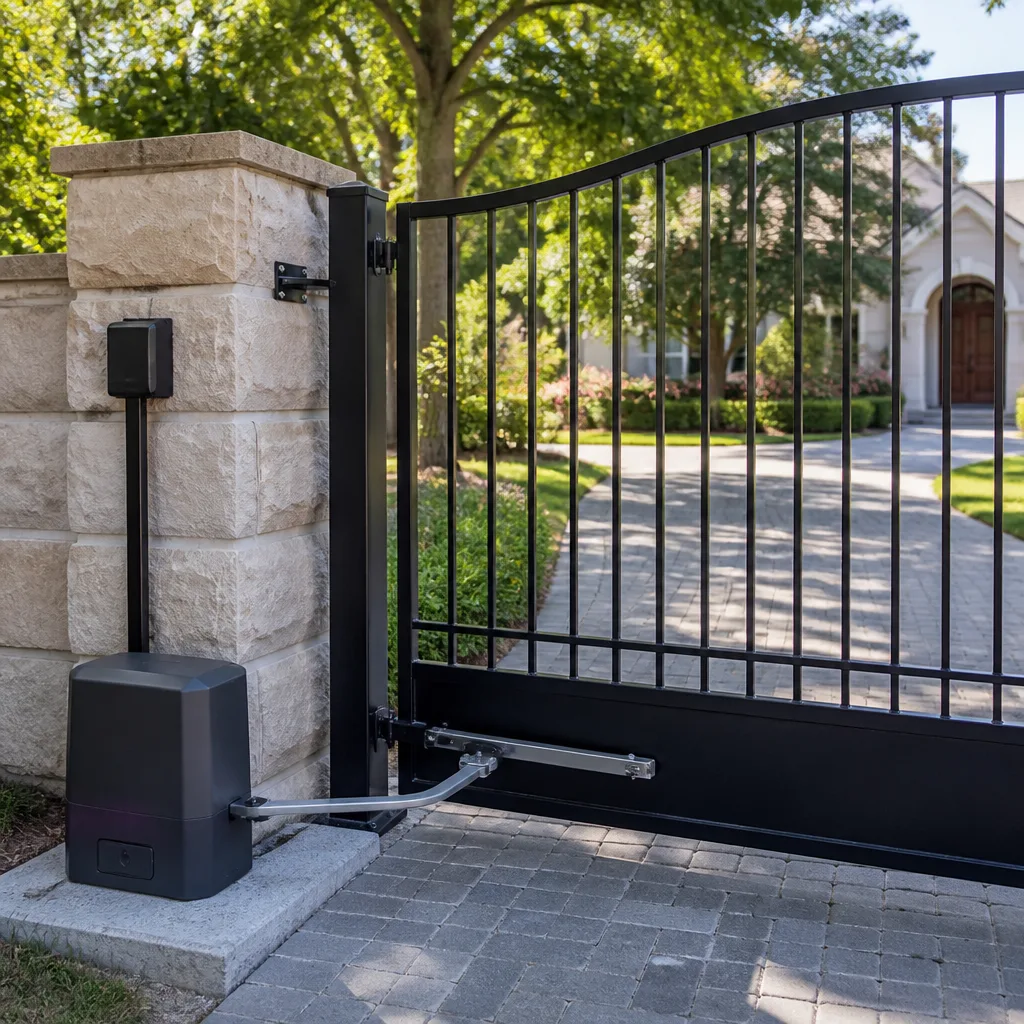
Inside the gate opener there is a set of plastic gears and a belt or chain. The plastic gears are designed to sacrifice themselves rather than let the motor burn out, and they do wear down. A gate that has been sagging or dragging will eat through gears far faster because the motor is working against resistance on every cycle. Belt-drive openers are quieter and generally last longer in the coastal environment than chain drives, which rust quickly near the salt air.
4. Wheel rollers and track
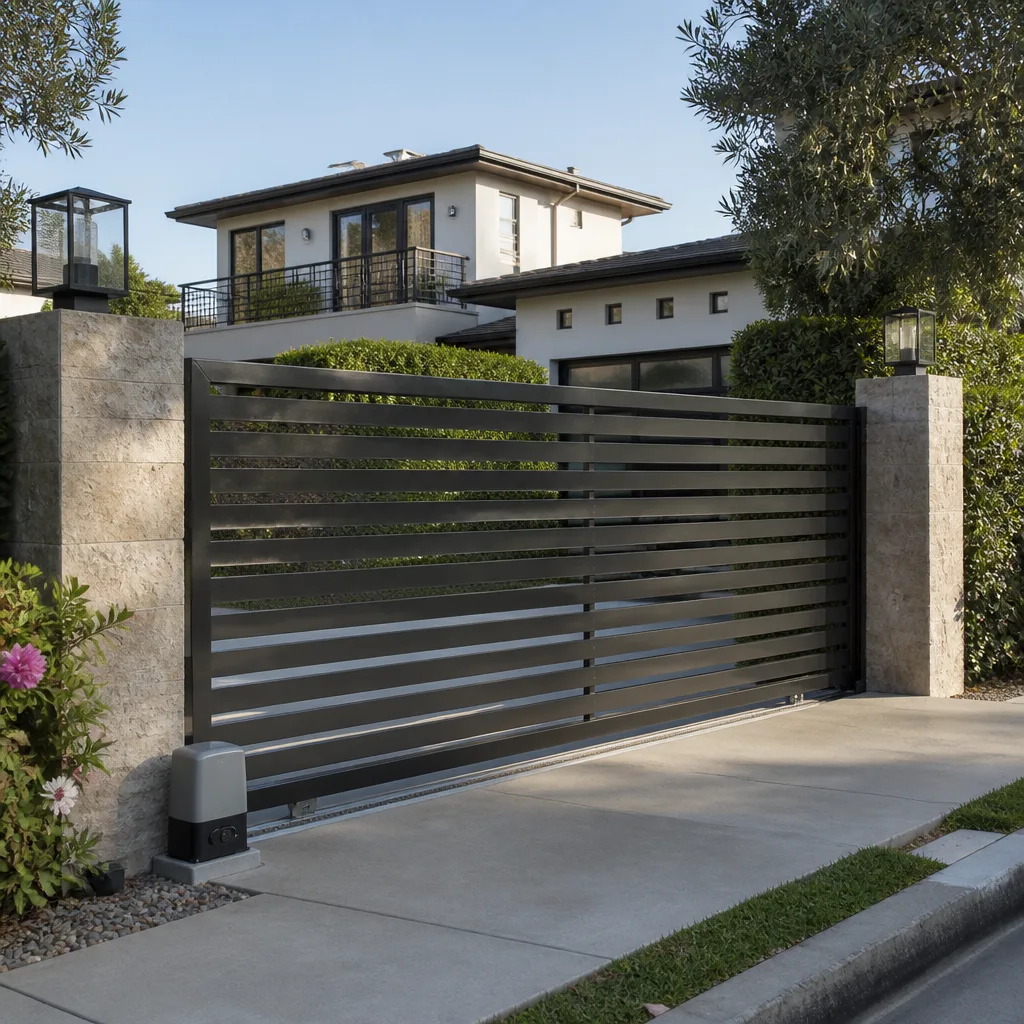
On sliding gates, the weight rides on wheel rollers that roll along a metal track. Salt and road dust mix into a grinding paste that wears down the wheel bearings. When a roller seizes, the gate starts jerking and the track gets scored. In Laguna Beach, where many driveways are short and gates slide into pockets carved into hillsides, track debris is a constant issue.
The seasonal routine described below exists to catch all four of these failures early, when a $40 wheel replacement is still a $40 wheel replacement and not a $700 motor rebuild.
Spring Gate Care in Laguna Beach: Clearing the Rainy Season’s Damage
By March, a Laguna Beach gate has been rained on since November. Even a dry winter leaves the gate damp every morning from the marine layer. Spring is the season of assessment, the time to walk the gate with a critical eye and see what winter left behind.
We recommend every Laguna Beach homeowner do one close inspection each spring, ideally on a dry morning in March or April. Here is what that inspection covers:
- Open and close the gate manually once. Disengage the opener with the release handle and push the gate through its full travel. It should move smoothly with no binding, no scraping, and no grinding. If it does not move easily by hand, the opener has been working against resistance all winter, and that resistance is consuming the motor.
- Look at the bottom edge of the gate panel. This is where rust starts on a steel gate. If you see bubbling paint, flaking metal, or rust staining, spring is the time to sand it down and repaint, before the summer sun bakes the damage deeper into the metal.
- Check every bolt and bracket. A socket wrench in hand, walk the hinge plates, the opener mount, and the gate bracket. Winter storms and temperature swings loosen hardware. A gate with a loose hinge bolt will shudder with every cycle, and that shudder travels through the whole structure.
- Test the safety features with an actual object. Put a cardboard box or a trash can in the gate’s path and close it. The gate should stop and reverse before touching the object. Do the same for the photo-eye sensors by waving your hand through the beam while the gate is closing. If either safety system does not respond, do not wait. A gate that does not stop is a serious safety hazard, especially on a property where grandchildren visit.
- Wipe down the motor housing. A damp rag takes off the winter’s salt film. While you are there, check that the cover is seated properly and that no moisture has pooled inside. If you see condensation inside the housing, the cover gasket needs attention.
Spring is also the right time to schedule a professional tune-up if the gate is doing anything unusual. Squeaks, jerks, hesitations, or a gate that opens fine but will not close consistently are all early warning signs. Fixing those issues in April is cheaper than fixing them in July, because small problems do not stay small through the dry season.
Summer Gate Care: Salt Film, Sun, and the Season of Heavy Use
Summer in Laguna Beach is the busiest season for a driveway gate. Kids are home from school. Guests come and go. The gate cycles open and closed more times in July and August than in the rest of the year combined. That makes summer the season of wear, not the season of corrosion. The moisture drops off, but the usage spikes.
The summer-specific concern is the salt film. By August, a gate that has not been wiped down since spring carries a visible white-gray haze on the hinges, the opener arm, and around the keypad. It comes from the fog that rolls in overnight and burns off by mid-morning. This film absorbs the sun’s heat unevenly and, more importantly, it works its way into threads and bearing surfaces where it cannot be seen.
Here is the summer routine we recommend for Laguna Beach homeowners, and it is intentionally short because we know summer is not the season for projects:
- Wipe the gate down monthly. A damp cloth over the hinges, the opener arm, the keypad, and the gate frame. Ten minutes. That monthly wipe removes salt before it has a chance to accumulate, and it gives you a natural moment to listen for new squeaks and feel for new roughness in the hinges.
- Listen for grinding. A gate that begins to grind in August is usually a gate with a failing roller or a gear set that has been slowly stripping since spring. The heavy summer use pushes a marginal component over the edge. The sound is the warning. Do not let it go until Labor Day.
- Check the keypad and the intercom. Summer sun cooks the plastic faces of exterior keypads. Cracks let in moisture, and then the buttons stop working. If your keypad housing is sun-faded, cracked, or sticky to the touch, replace it soon. The failure is predictable.
- Keep the track clear. This is especially important for sliding gates that run close to landscaping. Summer growth pushes plants and ivy toward the track. When a branch or vine gets caught under a rolling gate, it can derail the gate or bend the track. Trim anything within six inches of the track line.
One final summer note. If your gate opener is more than eight years old and you notice it runs hot to the touch after a few cycles on a warm afternoon, that heat is a failing capacitor or a worn motor. It will not fix itself. Hot-running motors fail with little warning, and they fail at the worst time, which in summer is right before a party or right after you have left for a two-week trip.
Fall Gate Care: The Most Important Tune-Up of the Year
If a Laguna Beach homeowner only does one gate task per year, it should happen in October. Fall is the moment when everything is still dry, the gate is accessible, and the winter rains are a known certainty on the horizon. A fall tune-up is preparation, and preparation is cheaper than repair.
A professional fall tune-up in Laguna Beach covers the full system. At our company, the work looks like this:
- Inspect and lubricate all hinges, rollers, and the opener chain or belt. We use marine-grade lubricants that stand up to winter salt exposure. Household products like WD-40 are not right for gate hinges; they clean but do not lubricate well enough for a 400-pound gate over a wet winter.
- Adjust the gate’s travel limits and force settings. Every opener has limit switches that tell it where to stop. Temperature swings shift these settings slightly, and a gate that slams into its stop or reverses mid-travel is often a limits issue. We recalibrate the limits so the gate closes gently and fully.
- Test the safety edges and photo-eyes under load. Not a quick wave-of-the-hand test, but an actual obstruction test with the gate’s full weight behind it. This is the single most important safety function on the property, and it is tested before every rainy season.
- Inspect all wiring connections for corrosion. The wire nuts and terminal blocks inside the opener housing and at the sensors are where coastal corrosion starts. We clean and reseat every connection. In our experience, a significant share of “my gate stopped working right” calls in November are just a corroded wire that needed ten minutes of attention in October.
- Clear the track and drain lines. Sliding gate tracks in Laguna Beach fill with sand, leaves, and debris. We clear the track, check the rollers, and make sure water will drain away from the opener rather than pooling around it.
- Apply a protective coating to exposed metal. A fall application of a rust-preventive treatment on hinges, bolts, and bare metal spots goes a long way when the rains arrive.
We price the fall tune-up at $89, and for most Laguna Beach gates it takes under two hours. The same work done reactively after a winter breakdown routinely costs four to six times that amount, because water damage has a way of ruining everything it touches. If you do one preventive thing for your gate this year, the October tune-up is the thing.
Winter Gate Care: Rain, Rust, and What to Check After Every Storm
Winter is not the season for big gate projects. The ground is wet, the gate is slippery, and the opener is dealing with conditions it does not face the rest of the year. Winter is the season of monitoring. You are watching for what the rain does to the system, and you are responding to small problems before they become winter emergencies.
Here is what we tell Laguna Beach homeowners to do during the winter months, particularly after any storm that drops more than a half-inch of rain:
- Walk the gate after the storm clears. Look for pooling water around the motor, the track, or the hinge posts. Standing water near electrical components is a problem even when everything “seems fine.” The damage may show up in February, long after the puddle drained.
- Check that the gate still closes fully. Wind and rain can nudge limit settings, and a gate that used to close tight against its stop may now leave a two-inch gap. That gap is not just a security issue. It means the gate is not sealing out wind-driven rain, and the interior components are getting wet.
- Watch for jerky or hesitant motion. Cold and moisture make existing problems louder. A gate that hesitated slightly in September may jerk badly in January. That is the same problem, not a new one. It just got worse, and it will continue to get worse until it is fixed.
- Check the caulking around any mounted keypads, intercom panels, and sensor housings. These fixtures are sealed against water, but the seals crack with age and sun exposure. If the caulk line looks dry or separated, have it resealed before the next rain. Water inside a keypad housing destroys the circuit board, and that is a $200 to $400 replacement that ten minutes of caulking would have prevented.
- Keep a repair fund ready, not a repair plan. Winter is when gate doors fall off hinges, motors fail, and storms knock branches onto tracks. When those things happen, they need attention within days, not weeks, because a broken gate in Laguna Beach means a home with no car access and often no secure perimeter. Calling us at (442) 246-9347 in January should give you a live person and a same-week service appointment, not a voicemail and a prayer.
One more winter-specific note for Laguna Beach. The city sits across a series of hillsides, and many driveway gates are installed on slopes with retaining walls above them. Heavy rain saturates the soil, and saturated soil moves. If your gate suddenly stops aligning with its latch or its stop after a series of storms, the problem may not be the gate at all. It may be that the ground under one hinge post shifted. That is a structural gate repair, a different class of work from an opener tune-up, and it should be evaluated by someone who understands how gates mount to slopes, not just by someone who can replace a circuit board.
A Simple Year-Round Maintenance Rhythm for Laguna Beach Homeowners
The sections above detail what to do in each season. Here is the whole year compressed into a single reference list. Print this section and tape it to the inside of a garage cabinet door.
The Annual Rhythm
- March or April: Full manual inspection. Disengage the opener, push the gate, check the hinges and bolts, test the safety features. Schedule any repairs identified during the inspection.
- May through August: Monthly ten-minute wipe-downs of the gate, hinges, keypad, and opener arm. Listen for new noises. Keep the track clear of plant growth.
- October: Professional fall tune-up. Lubrication, limit adjustment, safety testing, wire inspection, track clearing, rust treatment. This is the one appointment we tell every Laguna Beach homeowner to keep.
- November through February: Post-storm walk-arounds. Look for water pooling, gate gap changes, jerky motion, and caulk failures. Address problems within a week of noticing them.
The Money Question: What Does This Routine Cost vs. What Does It Save?
| Maintenance Item | Typical Cost in Laguna Beach | What It Prevents |
|---|---|---|
| Annual fall tune-up | $89 | Motor failure from binding, sensor failure from corrosion |
| Hinge pin replacement (both hinges) | $180-$320 | Sagging gate, stripped opener gears |
| Photo-eye sensor replacement | $120-$200 per sensor | Gate refusing to close, safety risk |
| Wheel roller replacement | $40-$90 per roller | Track scoring, jerky gate motion |
| Opener gear replacement | $250-$450 | Full motor replacement |
| Full opener replacement | $700-$1,400 | All of the above, left too long |
The math is straightforward. A gate that gets an $89 tune-up every October and a few minutes of attention each month generally costs less than $150 per year to maintain. A gate that is ignored until it fails generally costs $500 to $1,500 per repair event, and it fails more often as it ages. The homeowner who does the small work on schedule is paying less, not more.
This is the difference between a gate that lasts fifteen years and a gate that lasts six, and on a steel driveway gate in Laguna Beach, that difference is roughly the cost of a used car.
Common Mistakes to Avoid
After four decades of gate work, we have seen the same mistakes repeat themselves across the same driveways in Laguna Beach. Here are the ones that cost homeowners the most money, in rough order of expense.
- Lubricating the hinges with the wrong product. Spray lubricants like WD-40 clean well but they do not provide the long-term lubrication a 300-pound steel gate needs. Worse, thin lubricants wash away in the first rain. Use a marine-grade grease or a heavy silicone lubricant, or have a professional service apply it during the fall tune-up.
- Ignoring a squeak for more than a few weeks. A squeaking hinge is a dry hinge, and a dry hinge is wearing its bearing surface every single cycle. The squeak itself is not harmful. The wear it indicates is. Treat a squeak as a countdown, not a quirk.
- Disabling a safety edge or photo-eye because it was “too sensitive.” This happens. A homeowner gets annoyed that the gate reverses too easily, a handyman bypasses the sensor, and the property now has an 800-pound moving gate with no collision detection. Do not ever disable a gate’s safety systems. If they are malfunctioning, fix them properly. The danger is not hypothetical.
- Painting over rust instead of removing it. A coat of paint over an active rust spot hides the problem for a season and then the rust breaks through worse than before. Rust needs to be sanded, treated, and primed before painting. On ocean-facing properties, this is an annual or biennial task, not a one-time repair.
- Waiting until the gate has fully failed to call for service. A gate that is hesitating, jerking, or opening only partially is sending a clear message. Every week the message is ignored, the repair gets more expensive. The pattern we see over and over: a $200 repair in March becomes an $800 repair by August.
- Assuming the opener is the problem when the gate is hard to move by hand. If the gate is difficult to push when the opener is disengaged, the opener is not the root cause. The gate structure, the hinges, or the track is binding, and the opener is just the part that is working too hard. Replacing the opener without fixing the underlying mechanical problem means doing the same repair twice.
When to Call a Professional
Some gate maintenance tasks belong to the homeowner, and the section above covers most of them. But there is a clear line. The homeowner should wipe, watch, listen, and report. The professional should adjust, repair, and replace.
Call a gate professional if any of these conditions exist on your Laguna Beach property: the gate does not move smoothly by hand when the opener is disengaged; the gate reverses unpredictably or refuses to close; the safety features do not respond to an obstruction test; the opener runs hot to the touch; the gate has visible sag or the hinge posts have shifted out of plumb; or the motor makes a grinding sound. These are not tune-up issues. They are repair issues, and the longer they wait, the more expensive they get.
If you are in Laguna Beach and you are not sure whether your gate needs attention, call us and describe what you are seeing and hearing. We will tell you honestly whether it is something you can handle yourself, something we should schedule, or something that can wait. Our estimates are free, and we will not quote a repair we do not think is necessary. Ironworks Gate Co. offers free estimates in Laguna Beach, call (442) 246-9347.
Frequently Asked Questions
A seasonal gate tune-up in Laguna Beach typically costs $89, and the work takes about two hours for most standard driveway gates. That price covers lubrication, limit calibration, safety system testing, wire inspection, track clearing, and a rust-preventive treatment. A tune-up is far cheaper than any repair it prevents. Call (442) 246-9347 to schedule one.
A gate in Laguna Beach should receive a professional tune-up once a year, in the fall, before the winter rains. Beyond that, homeowners should wipe the gate down monthly during the summer and inspect it after every significant winter storm. Coastal salt and moisture make annual service a practical necessity, not an optional luxury.
Yes, and it is one of the most common reasons for opener failure in Laguna Beach. Salt film inside the motor housing corrodes wire connections, terminal blocks, and the control board. The damage is gradual and often invisible until the motor starts behaving erratically. A fall tune-up that includes wire inspection and cleaning prevents most salt-related motor failures.
A safety edge is a pressure-sensitive strip along the leading edge of a gate that tells the opener to stop and reverse if it hits something while closing. You can test it by closing the gate against a cardboard box or trash can. The gate should reverse before crushing the object. If it does not, the safety edge has failed and the gate is unsafe. Safety edges in Laguna Beach crack and fail from sun and salt exposure, and they should be tested at least twice a year.
An opener that opens but struggles to close usually points to a photo-eye sensor issue, a binding hinge or roller that resists the closing direction, or limit switches that need recalibration. The closing cycle is when the safety systems are most active, so any sensor malfunction shows up there first. In Laguna Beach, the most common cause is a salt-filmed or misaligned photo-eye. The fix is often simple, and the diagnosis is free.
It depends on the failure. Fifteen years is near the end of a coastal opener’s typical lifespan, and a 15-year-old motor with a failed control board is usually a replacement candidate because the replacement board plus labor approaches the cost of a new opener. But a 15-year-old opener with a simple gear or belt failure may have several years of life left. A good gate company will tell you which situation you are in without pushing a replacement you do not need. That is the kind of straight answer we give, because it is the kind of company we have been for over 42 years.
The Bottom Line
Laguna Beach gates fail for predictable reasons. Salt and moisture corrode the metal and the electronics. Wear accumulates in the hinges, the rollers, and the opener gears. The failure itself is predictable, and that means it is preventable.
The homeowner who wipes the gate monthly, schedules a fall tune-up every year, watches the safety systems, and responds to small problems within a week of noticing them will spend less money and face fewer surprises than the homeowner who waits for failure. The difference is not a matter of luck or gate quality. It is a matter of rhythm. A gate that is maintained on a rhythm is a gate that closes like the day it was hung, and a company that does the maintenance right is a company that plans to be there in forty years when you still own the same gate.
Written by Victor Salinas, Owner at Ironworks Gate Co., serving Laguna Beach since 2013.