
Free on-site gate assessment - hinges, posts, and your LiftMaster or Nice gate operator checked before anything is quoted
The assessment is free and the quote is the invoice.
Wood & steel frame
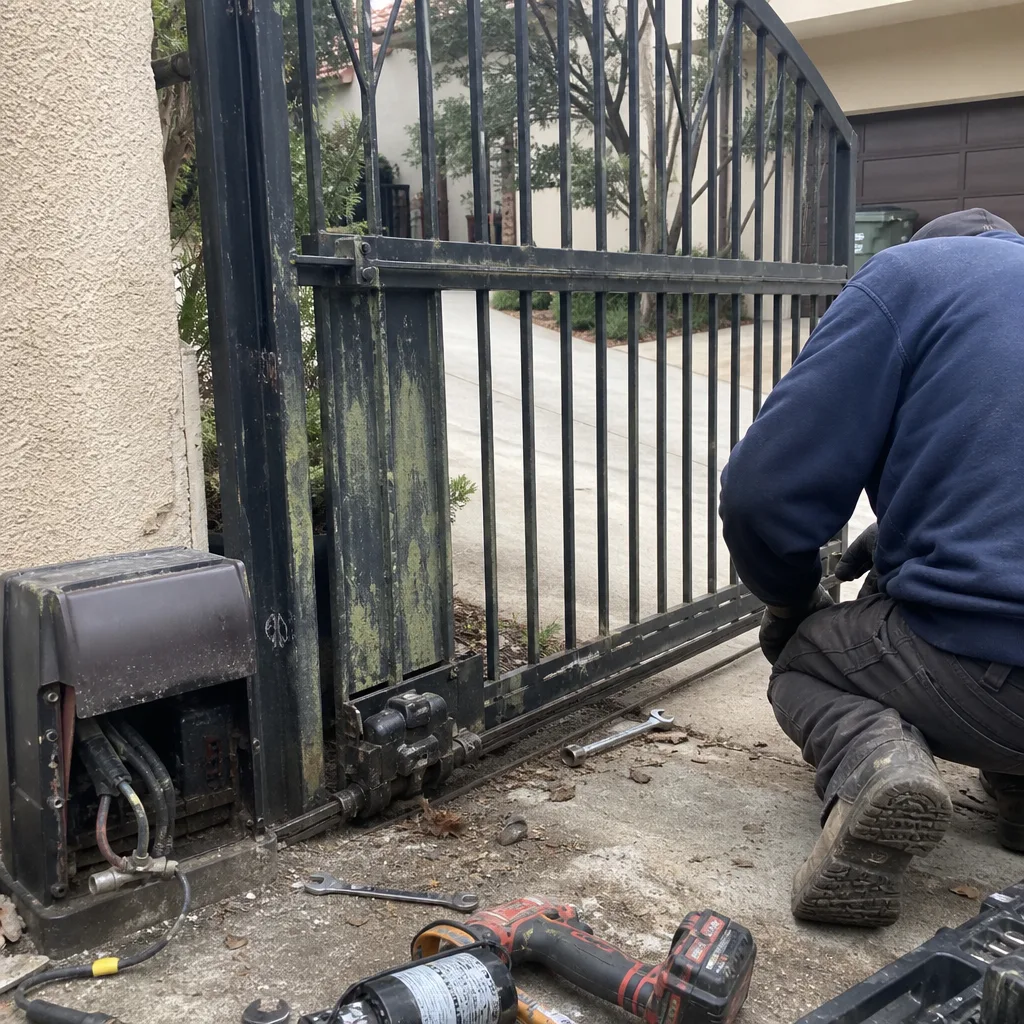 Before
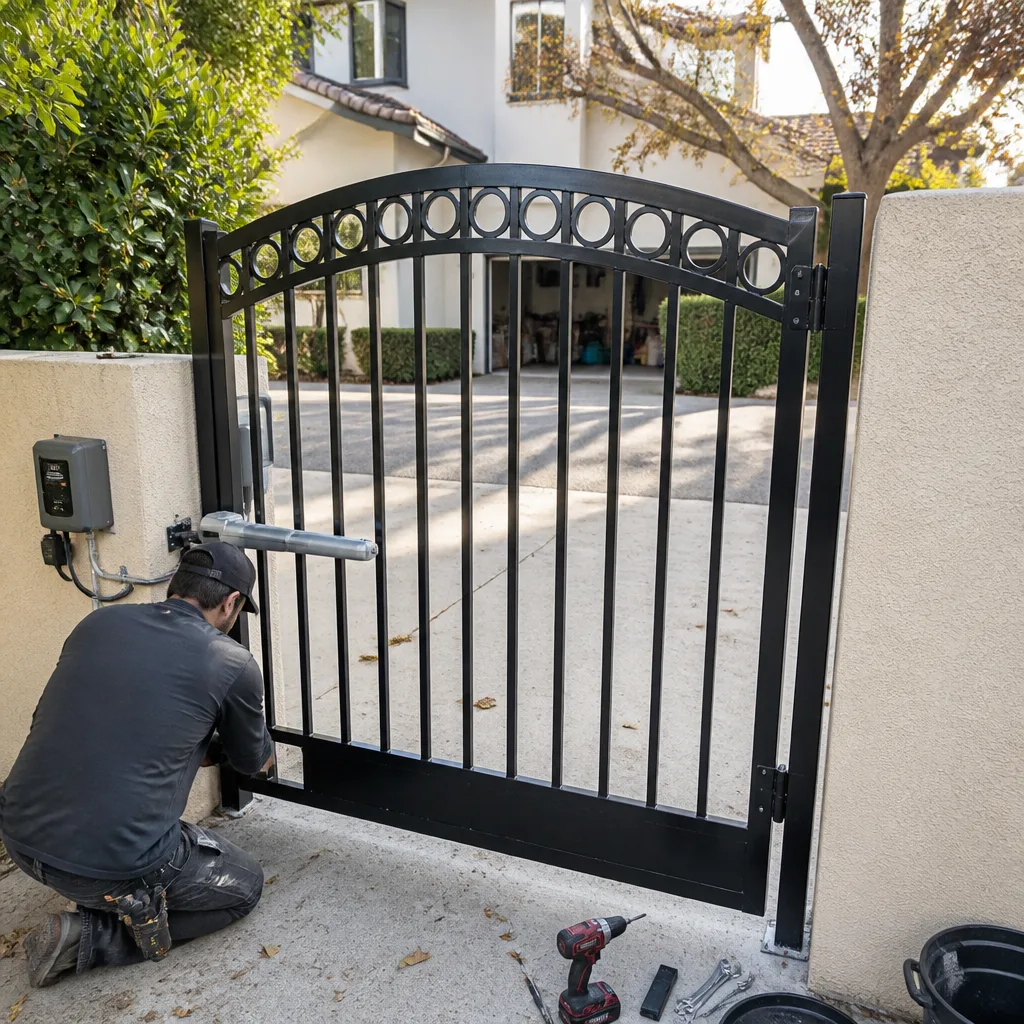 After
After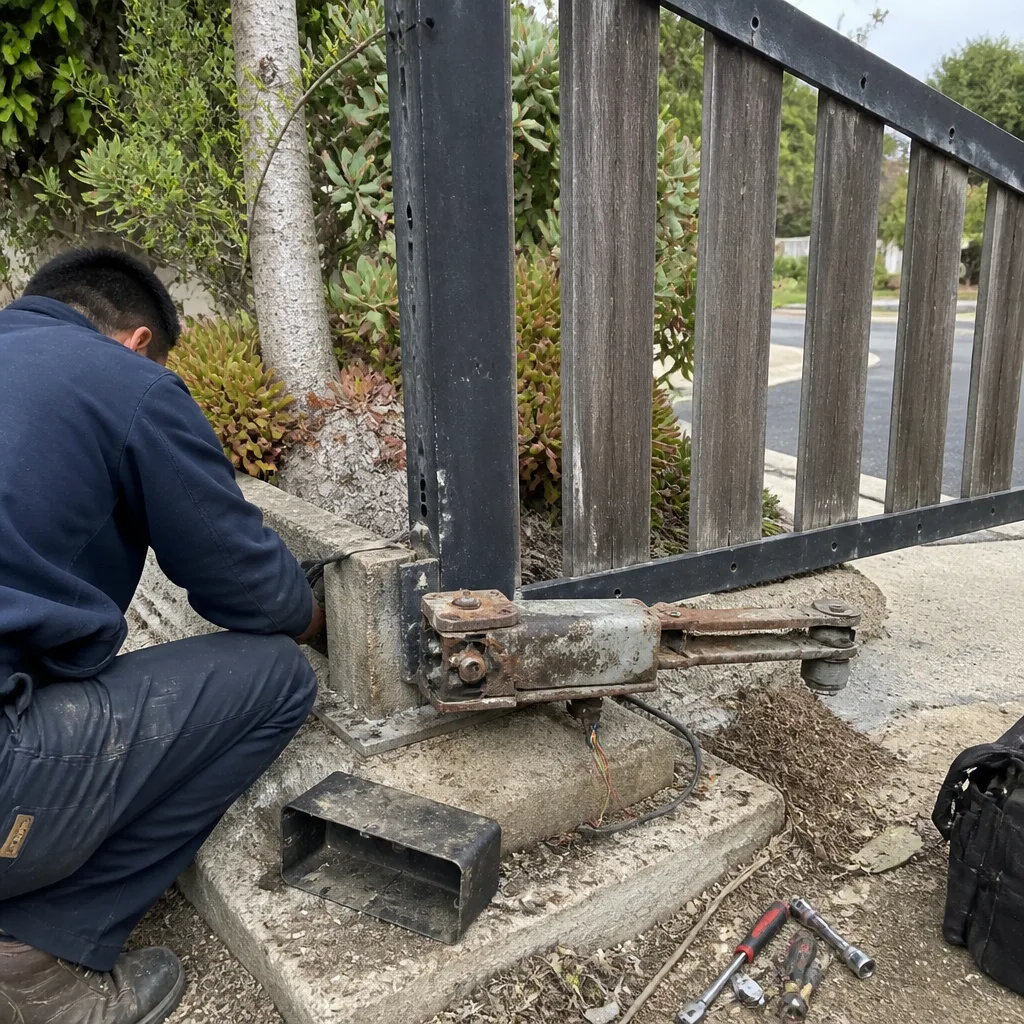 Before
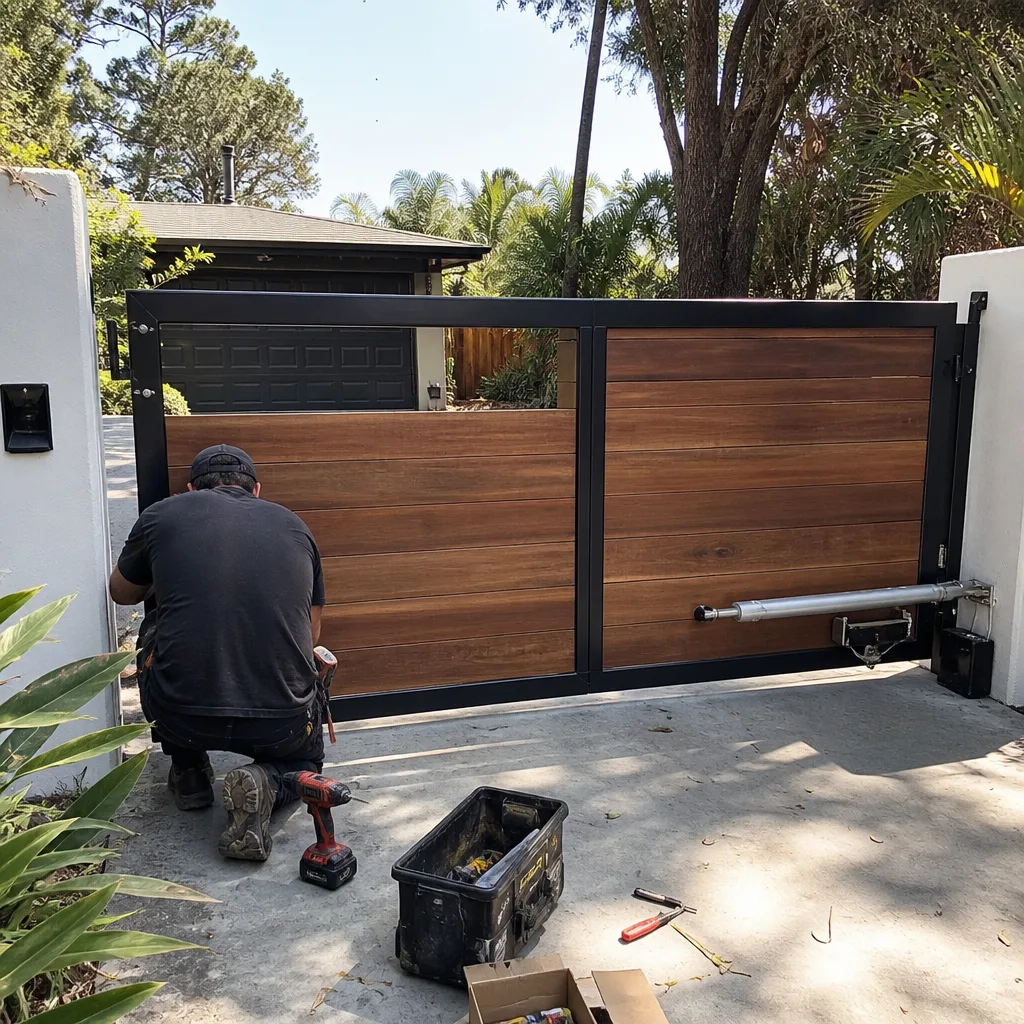 After
After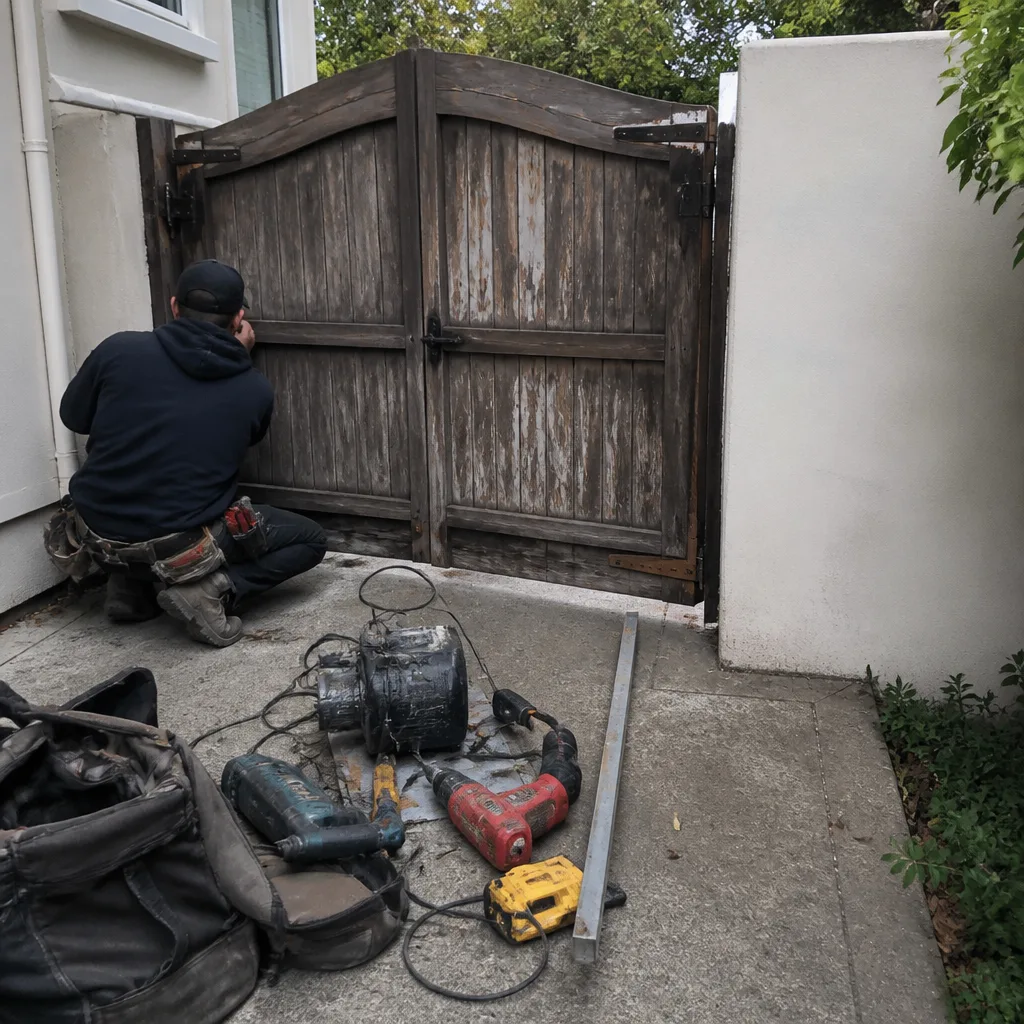 Before
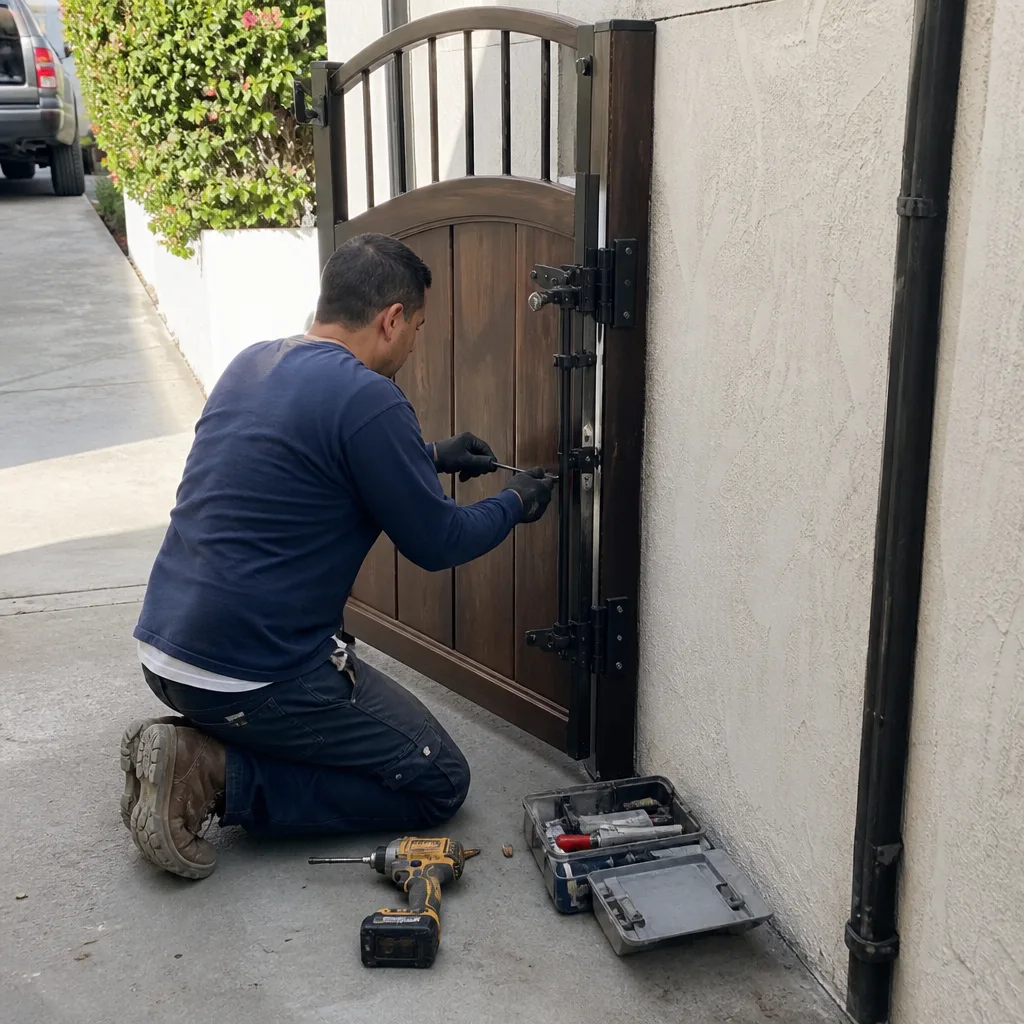 After
AfterFAAC Access Control Installation: The Laguna Beach Owner’s Guide
FAAC access control installation in Laguna Beach typically runs between $450 and $1,200 installed, depending on whether you need a keypad, card reader, phone-based entry system, or full keypad-plus-receiver retrofit. Most FAAC access control jobs are completed same-day by our technicians, since we stock FAAC-compatible keypads, receivers, and wiring harnesses on the truck. The usual way owners discover the part has failed is simple: the keypad lights up but the gate won’t move, or the remote works but the keypad stays dead, or the system accepts the code and nothing happens.
We’re an independent gate service company, not affiliated with FAAC, and we’ve been installing and replacing FAAC access control components on Laguna Beach gates long enough to know the coastal quirks. Salt air gets into keypad contacts. Canyon moisture works its way into receiver boxes. And the older FAAC 412 and 415 operator boards don’t always play nicely with newer wireless keypads. We’ll match the right part to your model and have it working before the afternoon fog rolls in.
Which FAAC Models This Applies To
The access control components on your FAAC system depend on which operator you have. FAAC’s most common residential swing gate operators in Laguna Beach are the 412, 415, 400, and the newer S418 and C721 series. Slide gate setups usually run a 740, 741, or 844. Each series uses specific receiver frequencies and keypad protocols, and this is where we see the most mismatched parts.
Here’s the compatibility gotcha: FAAC changed receiver frequencies over the years. An older 412 system often uses a 318 MHz receiver, while newer FAAC operators ship with 433 MHz or multi-frequency receivers. If you buy a keypad online and it’s the wrong frequency, it simply won’t pair, no matter how many times you try. A second gotcha: FAAC keypads wired directly to the board require the correct number of wires. Some models use a simple two-wire connection, others need four. If the wrong wire count is forced, you can damage the board. This is exactly the kind of thing we check before installing anything.
For FAAC systems, we generally recommend OEM FAAC keypads and receivers when the operator is still under a manufacturer’s warranty or when it’s the family’s primary entry point. Quality aftermarket equivalents work fine for secondary pedestrian gates or older operators where FAAC has discontinued the matching part. We’ll explain the difference honestly before any money changes hands.
Signs Your FAAC Access Control Installation Is Failing
- Keypad lights up, but the gate won’t open. The keypad is sending a signal, but the receiver or the board isn’t acknowledging it. Usually a frequency mismatch, a failed receiver, or a worn relay on the FAAC board. We test the receiver first, because that’s the $80 fix versus the $400 board replacement.
- The same code works intermittently. Intermittent operation on a FAAC keypad usually points to corroded contacts inside the keypad body or a loose wiring connection where the harness meets the board. Coastal fog and salt air accelerate this. A keypad that works “sometimes” is a keypad that will quit on the day you’re running late.
- Remote controls work, but the keypad is completely dead. This tells us the motor and board are fine, and the problem is isolated to the keypad or its wiring. If the keypad is over eight years old, it’s usually more cost-effective to replace it with a new FAAC-compatible unit than to chase a repair.
- The system accepts the code and beeps, but the gate only opens a few inches then stops. That’s not an access control failure, it’s a gate travel or obstruction issue. The access control is doing its job. The limits or the safety sensor need adjusting. We find this on Laguna Beach hillside gates where wind or settling has shifted the gate’s path.
- New keypad installed, but it won’t pair with the existing FAAC receiver. This is almost always the frequency mismatch we mentioned. It’s the most common problem we see with homeowner-installed keypads from online retailers. We can identify the receiver frequency in about ten minutes and either match the keypad or replace the receiver to pair with what you bought.
Replacement Cost & What’s Included
For a typical FAAC access control installation in Laguna Beach, here’s what you’re looking at:
- FAAC-compatible wireless keypad, installed: $450 to $650
- FAAC OEM keypad, installed: $600 to $850
- Receiver replacement and reprogramming: $300 to $500
- Full keypad plus receiver retrofit: $750 to $1,100
- Card reader or phone-based entry system: $800 to $1,200
The range comes down to the age of your FAAC operator, whether we need to run new wiring or can use existing conduit, and whether the receiver needs replacing along with the keypad. Every quote is given up front, in writing, before any work begins. There is no hourly billing surprise at the end. The installed part carries the manufacturer’s warranty, and our labor is covered by the 90-Day Done Right Promise. If something isn’t right, we come back and make it right. No forms, no arguing.
DIY or Call Us?
FAAC access control components operate at low voltage, usually 24V, so the electrical risk is low compared to an opener motor. But the compatibility risks are real. What an owner can safely check: the keypad’s battery if it has one, visible wire connections for corrosion, and whether the keypad itself has power. What we’d advise against: wiring a new keypad directly to the board without confirming the wire count and protocol. A wrong connection can short the control board, and a replacement FAAC board runs $300 to $600 before labor.
If you’d rather this be the last time you think about the keypad, call (442) 246-9347. We’ll match the right part to your FAAC model and have it working right the first time. Victor Salinas grew up near the Laguna Canyon Road corridor, and he’s the guy neighbors call when a coastal gate acts up. We fix it right the first time, or we come back, simple as that.
FAQs
A FAAC keypad in coastal conditions typically lasts 5 to 8 years before the contacts or the membrane start to fail. Receivers last longer, usually 10 to 15 years, but salt air can shorten both. If your keypad is past year six and acting up, replacement is the better investment than repair. Call (442) 246-9347 and we’ll tell you honestly which way to go.
Sometimes, but not often worth it. We can clean corroded contacts or re-solder a loose wire on an OEM keypad that’s only a few years old. Once the membrane or the internal chip fails, repair costs approach 70 to 80 percent of a new unit, and a new unit comes with a warranty. We’ll give you both prices and let you decide.
Most FAAC keypad and receiver installations take 45 to 90 minutes on site. If we need to run new wiring or mount a new pedestal, it can take up to two hours. We carry common FAAC-compatible parts on the truck, so the job is usually done in one visit.
Yes. We keep FAAC-compatible keypads, receivers, wiring harnesses, and photo eyes stocked on our service vehicles. We also stock parts for LiftMaster, Mighty Mule, and Ghost Controls systems, so whatever is on your driveway, we’re ready for it. If something unusual needs to be ordered, we’ll tell you the timeline before you commit to anything.
Written by Victor Salinas, Owner, Ironworks Gate Co. at Ironworks Gate Co., serving Laguna Beach and nearby areas.